Viskningar och rop [1972)

Cris et Chuchotements.

…et Chuchotements.

This horribly powerful film.

No light reading.

From the lips.

Fumbling big-hand thoughts.

Like Brice Parain said, inseparable from language.

We can see this fount at which Godard drank.

We can see the borrowing of von Trier.

We can see the fealty of Wes Anderson.

It is Cries and Whispers of Ingmar Bergman.

Tired, aging Bergman.

Clear as a bell.

Static shots which must be achieved through moving pictures.

Just stop moving for a moment.

And be quiet.

That microphone.

Just out of sight.

No B-movie swoop-downs.

But absolute perfection throughout.

And yet the message is dark.

No hope.

Cathartic, maybe.

Always fade to red.

And reemerge through the color spectrum.

Yellow to white light.

Four women.

Three sisters and a zaftig maid.

Someone’s crying Lord…

Come by here.  In a dream.  See their lips move.

We should love the coquette.  The redhead.  Liv Ullmann.

She should dominate us like a Renoir painting.

A madder rose cinema has known not.

But is she not a fake, Maria?

Is she not just a color palette towards which we gravitate?

What worth in the façade when the heart is empty?

It had been a long time since Summer with Monika, but Harriet Andersson was here.

And yet, it is Liv Ullmann who gets the plastic surgeon insults of the doctor (Erland Josephson).

But Harriet Andersson has enough grief with which to deal.

No no, I have gotten mixed up with all these actresses of Bergman.  And don’t even mention Ingrid!

We will come back to poor, sweet Harriet.

But we must first deal with the witch:  Ingrid Thulin.

What kind of misery makes such a witch?

A tissue of lies (reads the subtitles).

I believe Thierry Meyssan had to deal with such proclamations (though I read them in translation).

What kind of lies here, though…specifically?

Loveless marriage.

Probably even more empty than simply.

Loveless.

No creative punctuation.  No flirtatious commas or semicolons.

But simply poetry written like a telegraph dispatch.

Full stop.

Desperate.

Depression unto madness.  That is Ingrid Thulin here as Karin.

But then we must come back to our sickness.

A true physical ailment.

A patient.

Bedridden.

Patience.

It is Agnes.  Painful.  Wheezing.  Horrible.  Ghastly.

A high-water mark of art films.

Top that, motherfucker.

Jerry Lee to Chuck Berry.  Worse than an expletive.

But what brings this whole film together?  Who holds this house against her bosom?

It is none other than Kari Sylwan.

Yes, there are no important male characters within.

Georg Årlin chews his fish like someone in the diplomatic service should.

And expects “a little consensual rape in the evening” (to quote the Nick Cave of Grinderman).

But such petty existence boils the madness.

The glass.

Shards of light.

Smeared with lunacy.

Against all this is Kari Sylwan as Anna.

The maid.

The help.

Priceless.

Humanist.

A believer.  As the sick believed more than the priest.

No real important male characters here.

But Anders Ek is the voice of reason.  The voice of poetry.  For a moment.  Touching.

Don’t touch me.

Don’t touch me.

Such damage in the world.

And Anna bears it all.

The only true hero.

Meek.

Equally tormented.

But strong.

Annas make the world go round.  Deliver the medicine.  Keep the world from splitting open.  Make sure the trains are on time.  Hugs.

The history of cinema is littered with sad brilliance.

Strewn with fictional corpses.

Troubled directors trying to come to terms with their own fears of death.

And in the end, such creations loom large because they closest resemble the art of the ancient world and the itch of the Renaissance.

Storm on!  And write all night long!!

Someone has stolen my beard, but my mustache is plenty weird.

We shall live to see Nietzsche bitch-slap Hitler.

And Tarantino will again work at a video store.  Where he belongs.  A very able clerk.  Like me.


-PD
Airplane! [1980)

My congratulations to Hulu for finally making a move in the right direction as regards comedic movies.

This is a chestnut from my youth.

Directed by Jim Abrahams, David Zucker, and Jerry Zucker, this endless stream of one-liners hits some very special notes indeed.

[flying on instruments]

Ted Striker has a drinking problem…

His aim is off.

It dates back to when he was stationed on the island of Drambuie [sic].

He led the strike against Daiquiri.  We’ll be coming in low…beneath their radar.  Attacking from the north.

[when will you be back?  I can’t tell you that.  It’s top secret.]

Yes, his postwar record is even worse than his war record.

I know the feeling.

Leaves his cab with the meter running.

Striker is always coming in too hot.  Robert Hays.

World record for sweat.

But at least he has his Elaine for whom to hope.  Julie Hagerty.

Avoid the brown acid.  And the fish.

But if you do need a doctor, just look for someone perpetually wearing a stethoscope.

Leslie Nielsen.

Plays it straight as a javelin [donnnnnngggg!].

The cavalry trailing Kramer.

But back to Leslie…from Regina, Saskatchewan.

[Municipal bonds…AA rating…best investment in Canada]

Extremely underrated is Peter Graves as the pilot:  Clarence Oveur.

On the ovarian trolley.

[Have you ever seen a grown man naked?]

and

[Do you like gladiator films?]

or

[Have you ever been in a Turkish prison?]

And of course, the man himself:  Kareem Abdul-Jabbar.

{on this night when my Spurs fell a point shy to the Thunder}

The NBA’s all-time leading scorer (38,387) is Roger Murdoch.

I previously wrote about Kareem’s turn in the Bruce Lee “almost” Game of Death.

Airplane!, then, was his second appearance on the big screen (and first since his kung fu debut in 1972).

Lloyd Bridges picked the wrong week for everything.

All the vices.

From a fag to a swig to bennies to some genuinely Ramones shit.

{now I’m gonna have nightmares about Westbrook}

[How ’bout some coffee?]

[…never has a second cup of coffee at home.  …never vomits at home.]

Robert Stack checks in like Gregg Popovich after a meal at Taco Bell.

[That may have been the lousiest landing in the history of this airport…]

But the absolute secret weapon is the flamingly-gay Stephen Stucker as Johnny Henshaw-Jacobs.

[it looks like a big Tylenol]

[a hat, a brooch, a pterodactyl]

Stucker’s contribution is still alive (though he sadly passed away in 1986 at the age of 38).

And so the queen act was no act.

AIDS.

Shit…

[golly]

June Cleaver speaks jive.

Joey Hammen (Ross Harris) went on to have a very interesting music career which saw his path intersect with Beck, Stereolab, and The Dust Brothers.

[Odelay!]

David Leisure and Kawhi Leonard both went to San Diego State University.

That should definitely help us in Game 3.

But we’re going to need a lot more defense from Ethel Merman.

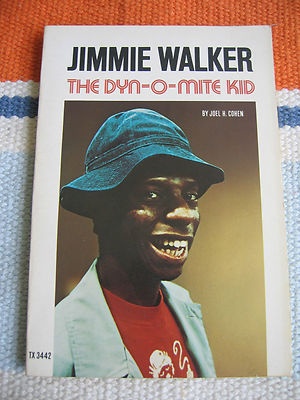
Really, the Spurs need to revisit this excellent tome by Joel Cohen:

dynomite

No library focusing on military strategy is complete without it.

From Jomini to Clausewitz to Winshield Wiper Man:

if he can just manage to get the hood back down on the Boeing 707 after checking the dipstick.

No need to commit hara-kiri, James Hong.  Just filed under “seppuku”.

It’s 1-1.  Go Spurs Go!


-PD

青春残酷物語 [1960)

[CRUEL STORY OF YOUTH, (1960)]

Today was a bad day.

You would be shocked (dear readers) if I asserted the opposite.

No, there is no sugarcoating it.

But that’s ok. [Ah!]

Such anxiety.  Such fear.  Such trepidation.

Ah!  That wasn’t so bad.

But don’t breathe relief too soon.  [Sigh…]

We’re surrounded by morons.  Condescending illiterates.

A fistful of assholes.

Yes, that Japanese up there indeed does not read Nick and Norah’s Infinite Playlist.

Things fall apart.  Shit happens.  Sometimes, the shit hits the fan.

That is the story of Nagisa Oshima’s Cruel Story of Youth.

Seishun Zankoku Monogatari…that’s what it says.

Kinda like Ugetsu Mongatari (which I reviewed some time back).

物語

Epic.

And it is.  More or less.

The story of Mako and Kiyoshi.

No magical powers here.  This is like the Japanese version of À bout de souffle.

If we don’t understand French (and we don’t), then we really shouldn’t be fooling around with Japanese.

That is my 2 cents…me, and the royal we.

Inseparable.

Mako and Kiyoshi.

Will they survive this cruel world?

Perhaps they must be cruel themselves to survive it?

And perhaps only Kiyoshi (cool as Jean-Paul Belmondo) is cruel?

Mako is no Jean Seberg.

She might be a coquette, but she’s not une dégueulasse.

Our film followed on the heels of Godard’s Breathless by a mere four months.

And what about Jerry Lee Lewis’ “Breathless”?

It preceded Godard’s film by two years (1958).

Any one else out of breath???

How about those Japanese protestors?

They weren’t keen on the Anpo treaty.

[Treaty of Mutual Cooperation and Security between the United States and Japan]

Yeah, a mere 15 years after Hiroshima and Nagasaki…and Japan was a beaten nation.

Doubly beaten.

Because they joined hands with their brethren (us) who had so recently vaporized them.

And so no wonder people were protesting.

But we don’t see protests in movies.

Not real protests.  Not anymore.

In fact, Japan does not even exist for the U.S. anymore.

Japan is like a house cat.

Domesticated.

Japan protests nothing.

Their economy slides with ours.

They are between a rock and a hard place.

Seemingly forever.

It is a geopolitical fault-line.

In the film we see South Koreans protesting.

This ended long ago (for us brainwashed viewers in the West).

Only the Chinese protest.

Tiananmen Square.  1989.

And CNN had a bird’s-eye view of tank man.

A bit too perfect.

But yes:  every nation protests.

Except the well-behaved Japanese and South Koreans.

But what about these recent tremors?

Okinawa.

As recently as February of this year.

Just what is going on?

Anpo is that famously robust treaty…in effect longer than anything since the Peace of Westphalia (1648).

I am reminded of my most erudite friend’s knowing focus on the war which these treaties (a series in 1648) ended.

Thirty years.

It was a bad day for Mako.  Rape.

The valiant rapist.

What?

It is like Dostoyevsky.

Stick around and the plot thickens.

Buked and scorned by Yuki (the sister).

Youth…how cruel it is to be taken.

And then our lovers reenact The Kid with no windows (but plenty of stones).

But I’m most sad for Horio.

It’s the old man in me.

Finally the reification gets to be too much for Mako.

And a tear rolls down her cheek.  In her sleep.

Busy signal.  Pink Floyd’s The Wall.

Twenty years.

A cement mixer.

Is she?  No.  It can’t end like that!

“This ain’t prostitution…IT’S EXTORTION! (tortion)! (torsion)!”

They call them the diamond dogs.

Oshima with a shadow play.

Kiyoshi holds Mako in the foreground.

Aki implores Yuki in the background.

[And for subtitlers everywhere, please think before you use the phrase “for old time’s sake” in a Japanese film.]

In her polka dot dress with the leeks peeking from the grocery sack.

Blammo!

The futility of youth.

The grimy uncertainty…the shifting sands.

The idealism made to lick the city sidewalk.

The valiant rapist saint.

INRI.

Ecce homo.

And Mako, fragile, with a bloody cheek.


-PD

Les Dames du Bois de Boulogne [1945)

Bresson has been slaying me recently.

First Balthazar, and now this.

They are similar.

Films which seem boring.

You watch them once.  They wash over you.  Very little effect.

And then you are stranded at the end of the world.

Just you and Górecki’s third symphony.

Yes, you pack away some life beneath your belt.

You ingest the poison trickery of the world.

Et voila!

The film comes to life.

All the Frenchies start out looking the same in black and white.

You furiously follow the subtitles.

But the film presents meaning the second time around.

First were the forms.

A donkey.  Some sluts.  Bad memory.

Les Dames du Bois de Boulogne is so forgettable the first time around.

All we remember is the Bois.

Conflated with some lines of Céline’s Voyage…

But this is the real deal.

Maria Casarès was like the Alida Valli of The Paradine Case here.

Indeed, it just may be that Hitchcock lifted the essence of his criminally underrated film (no pun intended) from Bresson’s minor masterpiece of two years previous.

Whatever the case may be, Casarès is absolutely diabolical as Hélène.

Revenge is a dish best served.

Simmer, reduce, garnish, and serve.

Revenge revenge revenge.

And yet we feel for Hélène.

And so in the grand mystery of the spheres we wonder, “What is God if not an impossible camera angle?”

A crumpled note.

Our hearts torn to shreds.

And always raining.

Like some goddamned B-movie with a thunder sheet in the wings.

If I didn’t hook you at first, then you’re not still with me.

HOW TO BLOG:

brevity.

The oppression of Twitter.

So we must think of the greatest tricks of all time.

The recent Microsoft Tay psyop.  To make Trump and his followers look stupid.

As if he needs any help.

But a very real conspiracy none the less.

For some events are so transparent.

And some pure whores like  Agnès (Elina Labourdette) have that bullshit detection meter straight out of The Shining.

Preternatural, if not supernatural.

We might think we’re being tricked.

Too good to be true IS.

“Deceit deceives itself.”  Guy Debord.  D.N. Smith.

It is a very delicate story.

The crystallization of immense pain.

Vanity, yes.

But also human nature.  Survival of the ego.

A hurt so deep as to propel plans.  Special plans.  Operations.

Some countries blow up their own cities.

The old “self-inflicted wound” ploy…as Clouseau would call it.

Orwell was very clear about this in 1984.  The government is firing rockets at its own people.

Because it is only natural to assume an outside enemy as culpable, the true authors slip by.

And as the narrative becomes codified and accepted…and everyone has come back to the NFL, and hockey, and soccer…then the beast can’t be disturbed.

The beast which knows not its own power.

The beast whose abuse rises from below.

The Lilliputians in charge condescend upwards.

All bark and no bite.

And the beast bites the wrong lands.

Afghanistan.  Iraq.

With each passing year the creation myth (9/11) requires inference upon inference upon inference to justify the next humanitarian bombing.

Libya.  Syria.

Very few understand the importance of replacing due process with death by Hellfire missile.

Yemen.

No wonder the video game makers consult with the Pentagon.

A seamless transition from energy drinks in mom’s basement to the joysticks of drone strikes.

Far afield.

From those ladies.

Those ladies who have been used.

Sold a false bill of goods.

A very sloppy expression.  Arcane.

Left dangling like a modifier.

And so we want to go back to a simpler time.

Before we gave up on our dreams (in the blink of an eye).

I call out to cold regions.  Cold rooms.

I call out to cold hearts.  Mixed response.

But the one true miracle is to push onwards.

No more sugar-coating the shite she dished out.

She was a real bitch.

And I was as mad as any painterly glass of absinthe ever existed.

I can’t forget.

No, never.

But I can forgive.

Not much here to steal or ruin.

A very marginal existence.

I can sleep because of a girl.

A dream of a girl.

A girl I don’t even know.

She is hope.

A sort of personification of liberty.

And when will we revolt from this life and bolt?

One step at a time.

Not hasty.

So many years piled on my shoulders.

This is, by the way, a film review.

Not caring how ridiculous I look.

Take your best shot.

World, shut your mouth.

I was no trick.

I’ve been desperate.  Money troubles.  My ethics in the gutter.

But given a second chance by the universe I made an important decision.

To be boring.

A few days longer.

Some dreams worth chasing, others are a disease.

People over profit.

Sign me up, Chomsky!

Better get right with the lord.

Or git hit in yer soul.

It’s easy.  Chomsky won’t touch 9/11.

And Alex Jones won’t touch Israel.

It’s easy.

Why?  Same team, different squads.

I don’t care.

Not being run down by no third-rate psyop.

Fuck your Godwin’s law.

This was 1945.

An odd year to be jilted.


-PD

The Golden Coach [1952)

My dear friends,

I wish not to trouble you,

but only tell you about this great film,

called Le Carrosse d’or in the French,

and La carrozza d’oro in the Italian,

because it is directed by the great Jean Renoir,

son of the Impressionist painter Pierre-Auguste Renoir,

and starring the quintessentially-gorgeous Anna Magnani,

God rest their souls.

It is as much an Italian film as a French film,

yet it is largely in English,

which means no subtitles for dumb Americans,

like myself.

Continuing,

this great epic is incomparable,

except maybe to the equally-vast Lola Montès of Max Ophüls,

which would appear a mere three years later (1955).

Imagine trying to tell the world a story in a foreign language,

not being able to use your native tongue,

because the natives don’t understand,

yet you crave that spotlight because of the exhilaration,

that double-edged sword of life vs. art.

But I have taken enough of your time today,

dear friends.


-PD


Deutschland im Jahre Null [1948)

The first thing film critics have to get right is the title.

Let me explain a bit.

On my site, I always list a film in its original language (to the best of my ability).

In my opinion, that is the best way of honoring the film.

So far, I have encountered the mild idiosyncrasies of Romanian, Serbo-Croat, Czech, and Polish in addition to the mind-blowing intricacy of Farsi and Japanese.

But with Deutschland im Jahre Null we are seeing a German-language film by an Italian director…sort of.

Italy has a very peculiar tradition concerning voiceovers and direct (or, conversely, indirect) sound.  It is an oddity which caught the attention of Godard in his role as film historian.

I cannot give you as erudite an explanation as my hero Jean-Luc, but suffice it to say that foreign (non-Italian) films in Italy have traditionally been overdubbed into Italian.  So, in other words, no subtitles.

This is distinct from an American viewer watching a Fellini film.  The “American” version (whether on DVD or as a film print in a theater) will be in Italian with subtitles in English.  This goes for almost all foreign-language (non-English) films marketed in the United States.

But getting back to Deutschland im Jahre Null…  It is similar to the Danish director Carl Th. Dreyer directing the French film La Passion de Jeanne d’Arc…with one major difference.  Dreyer’s film was a silent one (the only French being the intertitles).  Rossellini’s Deutschland im Jahre Null is very much in German.  We are hearing German actors speak (exclusively) German dialogue.

What is most interesting is the linguistic lineage of this film.  In English, this film is known as:

Germany, Year Zero

Which is quite similar to Rossellini’s preceding masterpiece (in linguistic parallel):

Rome, Open City

To be fair, let’s consider the Italian name (the real name) of Rome, Open CityRoma città aperta.  Fine.  That is the way I recognize the film.  The true name is (in my mind) Roma città aperta.

But with Deutschland im Jahre Null we come to a very strange case.  If we do not recognize the primacy of its English title (Germany, Year Zero), and I do not, then we are directed by that great arbiter of cultural legitimacy Wikipedia to consider our options exhausted by being cognizant of the Italian title (Germania anno zero).

What is the message of this omission by English Wikipedia?  I believe the message is that Germany was (and continues to be) a null.  A zero.  A conquered culture.

We see a similar thing in the kowtowing stereotype of conquered Japan.  And though Japan might be experiencing some moderate-to-light financial troubles in recent years, Germany is by all accounts the economic powerhouse of continental Europe.  Why do I bring economics into the discussion?  Because wealthy nations are able to assert themselves.

But let us step back a bit.  Wikipedia does have some tasty morsels of information concerning this film.  If the source can be trusted, this 1948 film was not shown in Germany (the country from whence the language of the film takes its name) until 1952.  After its single screening in München (Munich), it was not heard from again within those borders until it ran on German television in 1978. 

Wow…26 years.  Either this film was grossly misunderstood, or it was understood all too well.  From my reading, this is a very pro-German document.

Rossellini was not George Stevens making concentration camp propaganda.  Roberto was making art.  The sign of art is the admission of possibilities.  Art seduces us because it is subtle.  Art does not proclaim in blanket statements.  Art does not underestimate the intelligence of the viewer.

Roberto Rossellini did something with his “war films trilogy” which seems to have been unprecedented.  The desire of neorealism was to film fiction as if it were documentary.  This fiction would be, likewise, based on reality.

But why is it, then, that we have very different views of Roberto Rossellini and Robert Flaherty?

I will tell you my guess.  Flaherty’s sin was in the framing of his presentation.  To wit, he presented his staged documentaries (take the oil industry propaganda piece Louisiana Story for instance) as if they were naturally-occurring, spontaneous documentaries. The sin, then, was his duplicitous relationship with his subjects.  He actively made his human subjects into actors.

Rossellini takes a different tack.  There is no pretense that Deutschland im Jahre Null is an ACTUAL documentary.  It merely has the feel of that medium.  Likewise, Rossellini’s use of nonprofessional actors was likely more of a precursor to Robert Bresson than a twist on Flaherty’s bizarre formula (which predated Roberto in both Nanook of the North [1922] and Man of Aran [1934]).  No, Rossellini had created something new. 

It’s not so much the films of Flaherty to which I object as it is the idea of them.  At least one of his concoctions (perhaps thanks to director F.W. Murnau) is very fine indeed:  Tabu [1931].  Flaherty and Murnau co-wrote this ostensible documentary.  Indeed, with Flaherty we come into contact with inchoate, obscure film genres such as docudrama, docufiction, fictional documentary (ethnofiction), etc. etc. etc.

Most importantly, none of what I have written here has even scratched the surface of Deutschland im Jahre Null.   What ever became of the heartrending main child actor Edmund Moeschke?  I do not know.

One thing is certain to me:  no film before Rossellini’s “war trilogy” (Roma città aperta, Paisà, and Deutschland im Jahre Null) [1945/1946/1948] takes on such politically sensitive and important topics in such a raw way.  The closest would be the socialism of Eisenstein or the humanism of Chaplin. 

It is, therefore, no wonder at all that Rossellini spawned a million “new waves” the world over.


-PD


La Règle du jeu [1939)

I relate to Jean Renoir’s character.  Octave.  Fat, optimistic, and full of regrets.

Jean Renoir was, of course, the director of this film.

Likewise, he plays a very important dramatic role in the production.

I would argue that his role is the most essential of all.

In this film of rich, pithy characters, Octave sticks out like a polished stone.

Not a precious stone.

Simply a smooth, common rock.  A paperweight.  Our anchor.

And this is apparent on first viewing, yet La Règle du jeu necessitates multiple viewings to truly appreciate.

My language is not French.  Yes, perhaps it is my favorite language, but I am indebted to the subtitles.

And La Règle du jeu is replete with overlapping, symbolic dialogue.

But you don’t want to hear such boring play-by-play.

If you are reading, you want something special.

And I want something special when I watch a film.

Jean Renoir (son of the more well-known Impressionist painter Pierre-Auguste Renoir) delivers a masterpiece here.

There is a Great Gatsby effect which may put off modern audiences of modest means (like myself).

To wit, who wants to hear about rich people problems?

All I can do is urge patience when watching this film.

It may not immediately come off as riveting, but it is well worth it if you stick it out till the end.

What should be pointed out is that Renoir was apparently making a statement about the upper classes which paints them in a not altogether flattering light.

More directly, this film takes aim at the elite and lets ’em have it (but in a very sneaky way).

And yet, it is not all about class warfare.

Far from it.

It embraces and repudiates.

Actions can be deplorable.  But those who commit deplorable actions are still humans.

We all have the capacity within us for unspeakable error.

Few among us truly stand out as regards vice.

But we are all touched by the world.

I estimate it quite unlikely than a truly monastic monk or nun is reading this post.

And if they are, I hope they are brewing up a nice batch of beer in Belgium.

The rules of the game.

The beaters.

Hired lackeys who whack the trunks of trees to drive the animal life out of the forest.

Moving like a line of riot police.

All for the rich to have their fun.

The hunt.

But Renoir is the true artist.

He makes it clear.

The rich aren’t all bad.

The poor aren’t all saints.

Both classes lean to the middle.

There are admirable actions from both sides.

Perhaps the class structure itself is suspect.

Perhaps it is a vestige whose time has come.

But reality is that rich and poor will wake up on the globe tomorrow.

Staggered in times.  Zones.

Rich at their leisure (we imagine).

Poor at the more brutal hours (no doubt).

The poor run around like rabbits chased out of the forest.

The rich sit in their hunting blinds and preach gun control.

The true hunt now is the techno hunt.  The bio hunt.

But a girl and a gun can still carry a movie.

And so, I have rambled enough about La Règle du jeu.  It is truly an indispensable film.

Something about it is almost impenetrable for an English speaker (monoglot) in the 21st century.

And so we hope the French haven’t forgotten their fondateurs like Jean Renoir.

Lessons.  Lessons.

It’s up to all of us to preserve these slices of history.

Yes, it is fiction.  Yet, real life was employed (implored) in the making of this fiction (which seeks to be lifelike).

An endless reflection.

In the hall of mirrors at Versailles.

-PD

Un film comme les autres [1968)

I took the road less-traveled.

And then I cheated

But there is no cheating this.

A film adrift in the cosmos.

My grasp of French is not good.  Watching this film is not the same as ordering a sandwich at Subway in rural Quebec–and I am not very good at that (to put it mildly).

This film is saturated with revolutionary philosophy, theory, literary allusions.

Fortunately for me there were subtitles available…in Italian.

My grasp of Italian is non-existent.  Ok, maybe that’s a bit harsh.  I can get the general gist by way of Spanish similarities.

My grasp of Spanish is poor.

Wow.  What a quandary!

What am I even doing watching this film?!?

Well…because Jean-Luc Godard is my favorite director.

This film, however, might be rightly considered the official starting point of his years in the collaborative collective known as the Dziga-Vertov Group.

But any way you cut it:  this is a difficult film.

What are my own thoughts about it?

It is an exercise in minimalism.  It’s like Hitchcock’s Rope minus a plot.

But something has replaced plot.  That something is context.

As I watched this it became clear that the May ’68 events in Paris were the essential detail about which a viewer must have knowledge to understand this film (especially if said viewer is fluent in neither French nor Italian).

The other aspect which occupied my mind during the viewing (as my brain was blowing gaskets from hearing French and “reading” Italian simultaneously) was the “strategy of tension” connected to the false-flag terror attacks (Operation Gladio) in Italy in the 1970s and 80s.

Mai ’68.

General strikes.  de Gaulle.  Latin Quarter.  Situationist International.  Nanterre.  Sorbonne.

Rive Gauche.  Molotov cocktails.  Agents provocateurs?

Daniel Cohn-Bendit.  Nantes.  Nanterre. (WESTXLAYERTWO)

Renault.  Billancourt.  Paris Commune.  1871.

Sous les pavés, la plage!

“Ne travaillez jamais”  –Guy Debord (1953)

Graffito.  Graffiti.

Wikipedia leaves out the Debord quote, but the article is generally good.

Title:  May 1968 events in France

I should however mention that Godard’s exclusion from the cinema portion at the bottom of the article is eye-popping.

So be forewarned:  if you want to know the truth you will have to dig deeper.

BETWEEN SUBTLE SHADING AND THE ABSENCE OF LIGHT LIES THE NUANCE OF IQLUSION

1q84.

IT WAS TOTALLY INVISIBLE HOWS THAT POSSIBLE ? THEY USED THE EARTHS MAGNETIC FIELD X THE INFORMATION WAS GATHERED AND TRANSMITTED UNDERGRUUND TO AN UNKNOWN LOCATION X DOES LANGLEY KNOW ABOUT THIS ? THEY SHOULD ITS BURIED OUT THERE SOMEWHERE X WHO KNOWS THE EXACT LOCATION ? ONLY WW THIS WAS HIS LAST MESSAGE X THIRTY EIGHT DEGREES FIFTY SEVEN MINUTES SIX POINT FIVE SECONDS NORTH SEVENTY SEVEN DEGREES EIGHT MINUTES FORTY FOUR SECONDS WEST X LAYER TWO

strategia della tensione

SLOWLY DESPARATLY SLOWLY THE REMAINS OF PASSAGE DEBRIS THAT ENCUMBERED THE LOWER PART OF THE DOORWAY WAS REMOVED WITH TREMBLING HANDS I MADE A TINY BREACH IN THE UPPER LEFT HAND CORNER AND THEN WIDENING THE HOLE A LITTLE I INSERTED THE CANDLE AND PEERED IN THE HOT AIR ESCAPING FROM THE CHAMBER CAUSED THE FLAME TO FLICKER BUT PRESENTLY DETAILS OF THE ROOM WITHIN EMERGED FROM THE MIST X CAN YOU SEE ANYTHING Q ?

Anni di piombo

Fear, propaganda, disinformation, psychological warfare, agents provocateurs, false-flag terrorists (sounding familiar?)

If you live in the USA it should.  Same goes for UK.  And Canada.  And France.  And Norway.  Ad nauseam.

But the initial testing was in Italy.  One might also mention Greece and Turkey.

Piazza Fontana.  Aldo Moro.  Henry Kissinger.  Threats.

l’Ulivo.  2000 Italian Parliamentary Commission report.  Strategy of tension was supported by United States.

On this subject Wikipedia is not very good.  It is misleading.  It is covering up for something.  Of course, I am speaking about the English version.

My initial “cheating” was looking at a translated copy of the Un Film comme les autres page on Italian Wikipedia.  The optimist in me hopes that this strange film “about nothing” (most would probably say) inspired the Italians even more than the French.  Present availability of this film might bear this out.  The pessimist in me sees some Italian opportunists out to make a buck (knowing that this film is available in no other territory).  But the subtitles support the former assertion.  If you are an English monoglot, good luck!

George H.W. Bush refused to comment.  Of course he did!  Operation Gladio.

1990.  Seems so long ago that the European Parliament had the balls to condemn NATO and the US for the terrorism of Operation Gladio.  Here Wikipedia succeeds.

Title:  Operation Gladio

That’s cause the EU doesn’t really care about its people either anymore.  Yes, we know…European Coal and Steel Community, etc. etc. etc. ad nauseam.

CIA director William Colby was quite candid about this whole operation in his memoirs, it seems…  No wonder he died in a “boating accident” in 1996.

On the other hand…  “The CIA can neither confirm nor deny the existence or non-existence of records responsive to your request.”   Well that’s very fucking helpful, FOIA.  Works like a charm!

I recommend Daniele Ganser’s work as well as that of Gianfranco Sanguinetti.

If you’ve made it this far, then you understand the gist of the film under review.  That’s what I tell myself.  I’m like one of those students in the weeds…trying to understand it all as the sun hits the hair of the beautiful girl in the yellow socks.  There are no faces in the summer colors…just glimpses…glints.  Memory is black and white.  Recollections of a man with a movie camera.

-PD