Airplane! [1980)

My congratulations to Hulu for finally making a move in the right direction as regards comedic movies.

This is a chestnut from my youth.

Directed by Jim Abrahams, David Zucker, and Jerry Zucker, this endless stream of one-liners hits some very special notes indeed.

[flying on instruments]

Ted Striker has a drinking problem…

His aim is off.

It dates back to when he was stationed on the island of Drambuie [sic].

He led the strike against Daiquiri.  We’ll be coming in low…beneath their radar.  Attacking from the north.

[when will you be back?  I can’t tell you that.  It’s top secret.]

Yes, his postwar record is even worse than his war record.

I know the feeling.

Leaves his cab with the meter running.

Striker is always coming in too hot.  Robert Hays.

World record for sweat.

But at least he has his Elaine for whom to hope.  Julie Hagerty.

Avoid the brown acid.  And the fish.

But if you do need a doctor, just look for someone perpetually wearing a stethoscope.

Leslie Nielsen.

Plays it straight as a javelin [donnnnnngggg!].

The cavalry trailing Kramer.

But back to Leslie…from Regina, Saskatchewan.

[Municipal bonds…AA rating…best investment in Canada]

Extremely underrated is Peter Graves as the pilot:  Clarence Oveur.

On the ovarian trolley.

[Have you ever seen a grown man naked?]

and

[Do you like gladiator films?]

or

[Have you ever been in a Turkish prison?]

And of course, the man himself:  Kareem Abdul-Jabbar.

{on this night when my Spurs fell a point shy to the Thunder}

The NBA’s all-time leading scorer (38,387) is Roger Murdoch.

I previously wrote about Kareem’s turn in the Bruce Lee “almost” Game of Death.

Airplane!, then, was his second appearance on the big screen (and first since his kung fu debut in 1972).

Lloyd Bridges picked the wrong week for everything.

All the vices.

From a fag to a swig to bennies to some genuinely Ramones shit.

{now I’m gonna have nightmares about Westbrook}

[How ’bout some coffee?]

[…never has a second cup of coffee at home.  …never vomits at home.]

Robert Stack checks in like Gregg Popovich after a meal at Taco Bell.

[That may have been the lousiest landing in the history of this airport…]

But the absolute secret weapon is the flamingly-gay Stephen Stucker as Johnny Henshaw-Jacobs.

[it looks like a big Tylenol]

[a hat, a brooch, a pterodactyl]

Stucker’s contribution is still alive (though he sadly passed away in 1986 at the age of 38).

And so the queen act was no act.

AIDS.

Shit…

[golly]

June Cleaver speaks jive.

Joey Hammen (Ross Harris) went on to have a very interesting music career which saw his path intersect with Beck, Stereolab, and The Dust Brothers.

[Odelay!]

David Leisure and Kawhi Leonard both went to San Diego State University.

That should definitely help us in Game 3.

But we’re going to need a lot more defense from Ethel Merman.

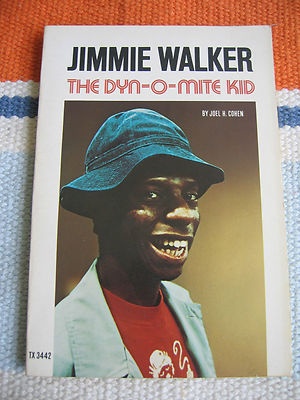
Really, the Spurs need to revisit this excellent tome by Joel Cohen:

dynomite

No library focusing on military strategy is complete without it.

From Jomini to Clausewitz to Winshield Wiper Man:

if he can just manage to get the hood back down on the Boeing 707 after checking the dipstick.

No need to commit hara-kiri, James Hong.  Just filed under “seppuku”.

It’s 1-1.  Go Spurs Go!


-PD

#8 Mr. Bean in Room 426 [1993)

First, a short list of Hulu failings:

-Pootie Tang (shite)

-Mordecai (shite)

-Lars and the Real Girl (epically shite)

-The Voices (shite)

-Mystery Team (shite)

-Hot Tub Time Machine 2 (shite squared) [catalog dilemma]

-Anchorman 2 (shite to the second power)

-Beverly Hills Cop II (repetitive shiteness) [catalog dilemma]

-Cannonball Run II (must see first episode to appreciate this shite)

-Teen Wolf Too (now with word shite!)

-The Naked Gun 2 1/2 (quasi-decimal shite)

-The Naked Gun 33 1/3 (LP shite)

-My Best Friend’s Wedding (shite)

-Cashback (shite)

-Dear White People (shite)

-Everything Must Go (shite)

-Jerry Maguire (shite)

-The Skeleton Twins (shite)

-Trailer Park Boys (shite)

-16-Love (shite)

-Novocaine (sic shite)

-Dark Horse (Judeo-Nepotistic shite)

-Little Paradise (shite)

-Frances Ha (epically shite)

-Stranger Than Fiction (shite)

-8 Heads in a Duffel Bag (shite)

-C.S.A.:  The Confederate States of America (ambitious shite)

-Trees Lounge (depressing attempt at shite)

-King of California (total shite)

-Dead Hooker in a Trunk (go-back-to-film-school shite)

-Are You Joking? (more Judeo-Nepotistic shite)

-And Now a Word From Our Sponsors (shite)

-Falling Star (Kosher Casino shite)

-Jewtopia (no comment)

-The Girl With the Dragon Tattoo (Swedish shite)

-Heathers (cruel shite)

-Sleeping Beauty (barely shite)

-Gold (Irish shite)

-The Hunger Games:  Catching Fire (quintessential shite)

-Jack Ryan:  Shadow Recruit (lazy shite)

-Mission:  Impossible (a colon-full of Scientologist shite)

-Space Milkshake (actually, not too bad…)

[I hate to say it, but the number of films by mediocre directors named Schwarz is really astonishing.]

Now, you might reason:  these are just the rantings of an anti-Semitic film snob.

I admit I don’t laugh easily.

It takes a lot to laugh, it takes a train to cry.

Mostly I don’t like waste.

Entitled filmmakers are more likely to make shite.

They didn’t earn their stripes.

They have an uncle who works for Sony Pictures.

Actually, the film school rubbish on Hulu is astonishing.

It is completely venal in nature.

I just happen to have had some bad experiences with unfunny Jewish films.

What do I mean, “Jewish films”?

I mean exactly what Brandon Tartikoff was referring to when he first saw the Seinfeld pilot.

In that instance, Tartikoff (himself Jewish) was wrong.

Seinfeld was genius!

Seinfeld is a funny show.

Yes, it exists in a Jewish milieu.

Tartikoff thought the show was “too Jewish” to appeal to Americans in general.

He was wrong.

But, sadly, now we have a gaggle of filmmakers who think they are Woody Allen or Mel Brooks.

Status update:  those two guys actually have talent!

Which is not to say they didn’t make some clunkers.

Hulu happens to have picked up two of those clunkers:  Bananas and Life Stinks.

No one’s perfect.

But please…dear world Jewry,

Please tell your precocious sons and daughters that they aren’t all geniuses.

Who’s funding this shit?

Hulu:  who the fuck is in charge over there!?!

Your catalog indicates that you enjoy wasting the monthly fees people pay for your woeful service.

Ok, ok…

A short list of Hulu successes:

-the Criterion collection

THE END.

And so…what part of the Hulu catalog presently needs the most work?

Answer:  the comedy genre of movies.

Second most problematic lack of imaginative curation?

Answer:  the drama genre of movies.

[If you think that Hulu’s selection of movies might be lacking (based on my first two points of emphasis), then you are right:  it is!]

Third crappiest category on Hulu?

Answer:  the “action & adventure” genre of movies.

Even Hulu’s genres are ass-backwards compared to the pinpoint precision of iTunes.

Korean Drama?  Really???  Ok.  I guess Hulu is really killing it in Seoul (and Pyongyang).

CEO Mike Hopkins needs to take a long look in the mirror.

Whoever got the Criterion catalog, give that person an infinite raise.

The rest of them?  Fire their sorry asses.

Beth Comstock needs to overturn the moneychangers’ tables.

Destroy YOUR business, Ms. Comstock.

Jason Kilar…you know what doesn’t work?  Faux-dreams.

Faux-tographs.

A catalog of shite.

Make a call.  Do lunch.

“Anywhere, Anytime:  Shite”

“For the Love of shite”

“Come Shite with Us”

Lot of people drawing a check at Hulu and turning out a subpar service.

The name Hulu comes from two Mandarin Chinese words…both of which translate roughly to “shite”.

Now, just to be fair…I wouldn’t sign up for Netflix if my life depended on it.

iTunes is a horribly antiquated business model (and offers very little value for consumers).

Amazon Prime Video was petty to disallow MacBooks (as incompatible devices) as late as last year.  Not to mention that Jeff Bezos is just a wannabe Rupert Murdoch who bans books like Nobody Died at Sandy Hook.  [And yes, Virginia, Murdoch is the great Satan.]

And so, with such a paltry selection of movies on Hulu, I’ve been forced to examine its television offerings.  The prospects are not much better.

But I will give credit where credit is due.

Mr. Bean was an excellent pickup.

If you want a tight, seamless work of art (unlike this rambling, frothing review), then check out the episode under consideration.

You know, not even the childlike Rowan Atkinson was above making fun of old people (in this episode) or suggesting that continental Europeans be purposefully killed by British drivers (tourists).  Check out his standup comedy album from 1995 for the latter bit.

Which just goes to show…we all lose our heads.

We all exercise poor judgment.  We all have poor taste now and then.

You may not believe it, but I have put my own sorry butt on the line to stand up for world Jewry.

I will be the first to admit that my term “Judeo-Nepotistic” is incredibly crass and insensitive.

And still, I would ask that Jews (who are no doubt hard-pressed on all sides) please exercise some judgment of their own.  Transparent nepotism is really tasteless.  It goes against our better Jeffersonian principles.

So there you have it.  Bobby Fischer was a jerk.  The Holocaust really happened.  Not so sure about the gas chambers.  You’re welcome Faurisson.  The Earth is not flat.  9/11 was an inside job (and therefore not an Israeli job).  Insofar as it was an Israeli job, the U.S. government was at least half-responsible.  It was much more likely an Israeli job than a Saudi job.  Much more likely a purely self-inflicted inside job (no substantial Israeli involvement) than an Israeli job.  And finally, Israel is a criminal country oppressing the Palestinians in a most disgusting manner.

And for good measure, yes Donald Trump is a bigot.  And he’s horribly wrong about immigration (both in regards to our Mexican brothers and sisters and our Islamic brothers and sisters).  But he’s still the only real choice for President.

Sanders has been right about one thing:  Snowden.  Snowden’s a hero.  But America is not a socialist country.  Sanders would actually be a bigger step backwards than Trump.

The other candidates (Clinton and Cruz) are worthless.

So there you go, Hulu…I need some better circuses here!

To keep me out of the political arena!!

I could use some bread as well 🙂

In any case, I’m sorry for my vile ranting.

But film is my religion.  Through film, omnism.

Stop defiling my religion, Hulu.  Your thoughtlessness is ghastly.

Hire some people who love cinema.

Get your shit together.


-PD


#3 The Curse of Mr. Bean [1990)

Just who does Donald Trump think he is???

Answer:  Sam Walton.

It’s the big, goofy, mesh-backed baseball cap.  The ones with the plastic snaps and infinitesimally small corresponding holes.  And then the squishy, peaked frontispiece:  “Make America great again” –or– (alternately) “Wal-Mart”.

That is the Donald’s costume…out on the campaign trail.  It’s bold.  Comedic.  A bit like George H.W. Bush “shopping” for groceries out among the common folk and being dumbfounded by this whole newfangled barcode scanner.

Yes, Donald Trump:  man of the people.

And so who did Rowan Atkinson think he was with Mr. Bean?

Well, that one’s a whole lot harder to pinpoint.

We might know Chaplin.  And Sellers.

But then there’s all these other institutions which don’t quite translate outside of Britain…The Goon Show, Dudley Moore, The Goodies…

Just from whence was Atkinson pulling his stuff?

We want to think it’s all original.  And perhaps it is.

But influence is unavoidable.

And so with the third and final episode of 1990, Atkinson gave us The Curse of Mr. Bean.  [1991 would yield only one episode of the show.]

The curse…hmmm…certainly sounds like an allusion to Sellers’ Clouseau.

Whatever the case may be, Atkinson’s material is all tied together with a very cohesive theme this time:  fear.

Fear of the diving board (afraid of heights).

Fear of public nudity or embarrassment (lost his trunks in the pool).

And finally the orgiastic grand guignol of laughter:

fear of movies.

It sounds like a pretentious art school pop album.

For instance, the Talking Heads’ Eno-produced Fear of Music (1979).

But for Bean, the horror was more of the Freddy Krueger type.

Indeed, by December 30, 1990 (this show’s airdate), there had already been five (yes, 5ive) A Nightmare on Elm Street movies.

Churned out of the dream factory like diabolical cotton candy, they appeared in 1984, 1985, 1987, 1988, and 1989.  The series then would recommence in 1991.  Which begs the question, just what was Freddy Krueger up to in 1986?  Laying low?  Vacationing?  The Caribbean?

To wit, Bean is scared witless while on a date (yes, those things where aspiring romantics “go out”) with the absolutely adorable Matilda Ziegler.

For those of you (like me) who can’t live without pithy character names, Ziegler’s role (like my beloved Enid Coleslaw) is that of Irma Gobb.

And Bean, therefore, is the man-child…the everlasting Gobbstopper [sic].

[Which is to say, Ziegler’s character is a reoccurring one.]

Perhaps we need to look further back to find a precedent for Rowan Atkinson’s Mr. Bean…perhaps out of the world of comedy proper.  Perhaps to the Dadaists?  I can certainly imagine Mr. Bean dressed as a sort of human tampon à la Hugo Ball…with lobster claw hands.  Or maybe Bean with a lobster telephone courtesy of Dalí.  Certainly Bean would have a pet lobster to take for walks in the Bois de Boulogne with a ribbon for a leash like Gérard de Nerval.

But we perhaps perhaps perhaps need to look further.  To the wry humor of Marcel Duchamp.  To the childlike fancy and brilliance of a René Magritte or an Erik Satie.  Even, god forbid, the humor of a Mauricio Kagel.

Conductors don’t have heart attacks mid-concert?  Not according to Kagel’s Ludwig Van.

Yet Bean never crosses that line of pretension.

He’s never Anthony Braxton’s Quartet for Amplified Shovels.

No, Bean always remains funny.

And so, perhaps, nothing is more revolutionary than comedy.

This kind of comedy.

Absolutely scripted, miniaturist-perfect comedy worthy of Jacques Tati.

In that sense, we might say that Mr. Bean is like Peter Sellers having Charlie-Chaplin-like total control over a production.  At least that’s the way it seems.

Perhaps we would be criminally neglecting the director of these first three Bean episodes:  John Howard Davies.

But in such comedies, the thing really does speak for itself.

Rowan Atkinson fills every moment of screen time in these gems with his thoroughly inimitable charm.


-PD

#2 The Return of Mr. Bean [1990)

As we enter into the second chapter of Mr. Bean’s television life, it is worth noting a particularly prevalent-yet-understated theme of the show:  loneliness.

For instance, Mr. Bean takes himself out for a birthday dinner.  He writes a birthday card for himself which, a short time after signing it, he discovers with naïve surprise and is heartened that he remembered his own birthday.

Yes, Mr. Bean is the surreal loner.

But there is another theme here:  optimism.

Bean doesn’t seem bothered by shopping alone (as long as he has his shiny, new American Express card…and his potato…and his fish).

No, he revels in the wonder of life.

Everything is an adventure.

If Seinfeld is a show about nothing, then Mr. Bean is a show about less than nothing.

Atkinson is wielding a sort of comedic antimatter weapon.

And the effect is devastatingly funny.

It’s funnier if you’ve had steak tartare, but it’s still funny if you haven’t.

Also present is that English (as in England) preoccupation with courtesy and politeness…manners, if you will.

Bean wants to save a man from the ignominy of embarrassment.  The bloke has picked up the wrong charge card.  So Bean surreptitiously picks the man’s pocket just to put the right card back in.  But his hand becomes stuck at the end of the act.  And so Rowan Atkinson is dragged all the way to the toilet with this man.  Silently following.

It brings to mind the famous Pink Floyd lyric:  “Hanging on in quiet desperation is the English way.”

I’ve many times thought that applies to me (as I am mostly of English descent…though a bit French…and Italian [Venetian]).

Few things in this world are more antiquated than the British monarchy and (not completely unrelated) “manners”.

I don’t have any particular fondness for Queen Elizabeth or any other royal (of any nation) who’s ever lived.  It’s a bunch of poppycock, if you ask me.

But manners are worth something.

Yes, I do respect the common man and the common woman…who remind us of a different time.  Common courtesy.  THAT is the true royalty of the planet.


-PD

#1 Mr. Bean [1990)

Ah!

A new decade, a new voice.

A VOICEless voice.

Focused on trigonometry.

Or, oops, calculus.

Pi day.

The first episode of Mr. Bean.

It’s all in the gait.

Shuffle along.

Arnold Rothstein.

Rowan Atkinson had immensely talented nostrils.

Right from the start.

And he was an industrious chap.

As I always say (and the maxim by which I live), if you’re going to be an idiot…at least be entertaining.

Indeed.

Jester of God.

Falling from the sky.

giullare di Dio

Hallelujah!  I know that part!!

Ritardando the fellow.

Yes, a caesura.

Very centered.

A smiley face.

I can’t quite draw what it is I mean.

But the main point is that Mr. Atkinson was/is a bloody genius.

It’s an overused word, but I think only a few have approached in comedy.

Chaplin.  Sellers.  Atkinson.

All English.

But I would add Andy Kaufman.

And perhaps Roberto Benigni.

Actors who could carry a whole production with their funny talents.

Such a rare thing.

An exam.  And church.  And don’t forget the beach.

Very much silent film.

Such a joy!


-PD


Planes, Trains and Automobiles [1987)

When I was a kid, this was a big family favorite.

It was one of those rare times when profanity got a pass.

That second time Steve Martin goes off…on Edie McClurg (the rental car lady).

But even funnier is the first time Martin pops off…in the Braidwood Motel in Wichita, Kansas…and John Candy just takes it.

Yes, there are some priceless moments in this film.

In some ways, this film defined an era.

Trading Places was an early-decade success (1983) for John Landis.

And then Walter Hill succeeded with a similar type of story, treated in his inimitable way, in 1985 (Brewster’s Millions).

But by 1987 the decade needed summation…and this particular genre which transcended classification needed a testament.

This is that film.

Funny enough, this was the same year the Coen brothers really started hitting ’em out of the park (Raising Arizona).  That film also is a veritable classic, but it is forward-looking.  It is almost like comedy in the hands of a David Lynch.

John Hughes was seemingly retrospective with Planes, Trains and Automobiles…like the J.S. Bach of the 1980s…summing up a decade of dirigist American comedy.

Hughes had a lot of career left to go in 1987, but this was a sort of highpoint…especially if considering only his directorial efforts.

Sure…Hughes was more counterculture earlier in the decade, but he wasn’t above putting his heart into a morality play like this one.

But to paint this film as a vanilla affair is not really accurate.

Consider Steve Martin’s yuppie character…a “marketing” professional on a business trip to New York from Chicago.

Martin’s character represents everything that was wrong with America in the 1980s.

Sadly, Neal Page (Martin) represents the problem which persists in America today.

Perhaps Isidore Isou’s famous class distinction fits here.

Neal Page, marketing professional, is an intern (as opposed to externe)…a cog in the wheel of production.

The Neal Pages of today would learn their marketing from an abomination such as Marian Burk Wood’s The Marketing Plan Handbook.

The Neal Pages of corporate America read a Wood phrase such as, “For the purposes of developing a marketing plan, advertising’s two basic decisions concern the message (what content will be communicated) and the media…,” without ever thinking Marshall McLuhan.

A savvy seller of used books might file The World is Flat in “Sociology” (in addition to the more strictly-applicable “Business”) in an effort to unload what must surely be one of the most overprinted books of recent memory.

But what bookseller ever thinks to place Understanding Media:  The Extensions of Man (1964) in the “Business” section…or in the Marketing/Advertising “disciplines”?

Marketers, no doubt, would have a glib answer.

But marketers rarely know more than their insular, myopic areas of pseudo-specialty.

The “right” answer…the culturally literate answer…the answer Marian Burk Wood was either too dumb to include…or too convinced that her dumbed-down readers would not get…is McLuhan’s:

“…the medium is the message.”

The first sentence of the fucking book!

Chapter 1 (also, conveniently titled, The Medium Is The Message):

“In a culture like ours, long accustomed to splitting and dividing all things as a means of control, it is sometimes a bit of a shock to be reminded that, in operational and practical fact, the medium is the message.”

But the character Neal Page wouldn’t have known that…and that’s why he gets “schooled” in business by the portly, genuine Del Griffith (John Candy).

Of course, Candy’s character wouldn’t have known this either…but at least he wouldn’t have been a venal, meretricious, entitled prick like Neal Page.

And so Neal Page didn’t really go the extra mile in business school…  He just took all the bullshit shoveled down his throat as gospel truth.

Therefore, Page wouldn’t have known this gem either…a parallel to McCluhan from just three years later (1967).

Again, the first fucking sentence of the book:

“The whole life of those societies in which modern conditions of production prevail presents itself as an immense accumulation of spectacles.  All that once was directly lived has become mere representation.”

Ok, so I gave him two sentences.  Those are the words of Guy Debord from his masterpiece La société du spectacle (The Society of the Spectacle) [translated by Donald Nicholson-Smith].

Notice the similarities to McCluhan.

But, of course, Debord was referencing the big daddy of them all:

“The wealth of societies in which the capitalist mode of production prevails appears as an ‘immense collection of commodities’…”

Karl Marx.  Das Kapital, Kritik der politischen Ökonomie (1867).  Translated by Ben Fowkes.

And so today’s marketing professionals are either brain-dead (thanks to authors like Wood) or craven cynics thanks to equally worthless authors such as Philip Kotler and Kevin Lane Keller.

These last two have contributed a tome to the pseudo-discipline of “marketing” entitled A Framework for Marketing Management.

If anything has ever called for the revocation of tenure, it is the appalling lack of intellectual curiosity these two professors (from Northwestern and Dartmouth, respectively) show over the course of their overpriced bible for aspiring C-level automata.

Consider their statement, “…make low-profit customers more profitable or terminate them.”  Now do you see why America has problems?

And again, “Spend proportionately more effort on the most valuable customers.”

Thank God for the Del Griffiths of this world.

People are not statistics to be terminated.

God bless John Candy and John Hughes for poignantly reminding us of the only true value in life.

Relationships.

Not to be “leveraged”.

Just people.

Plain and simple.

As Del Griffith says, “What you see is what you get.”

Genuine.

THAT’S the marketing of the future!

And it can’t be contrived…


-PD


Trading Places [1983)

At one point in my life I could honestly say that everything I knew about business I had learned from the movie Trading Places.

This film came on TV all the time when I was a kid.

And it never failed to pull me in.

But back to business…it’s that one scene:

coffee, wheat, pork bellies, gold, and (of course) orange juice.

Ok, so I mixed up the order a little bit.

But that’s the “breakfast” of commodities which sits before Billy Ray Valentine (Eddie Murphy) as he is given a crash course in commodities trading by the Duke brothers (Randolph and Mortimer).

It always made a big impression on me…pork bellies.

And now as I descend from the halfway point of my MBA studies this film carries a richer meaning for me.

The gorilla comes with a bill of lading.

That’s not the type of stuff you catch as a six-year-old.

And I must admit that this film is all the funnier when the expletives are put back in.

And the nudity.

Yes, it was usually the sanitized version we saw on TV.

But maybe sometimes…on a special channel…the real version.

At any rate, this is truly an American classic.

Not least because it was produced by a true American hero like Aaron Russo.

Why do I call him a hero?

Because he stood up for something worth standing up for.

It’s no wonder.

Watching this film.

The agog camera views of the World Trade Center.

But let’s stick to the teaching tool at hand.

Trading Places was just that:  a beautiful teaching tool.

In some ways, therefore, it is aiming at the same thing as Le Gai Savoir.

The particular argument at issue is the famous “nature vs. nurture” debate.

Perhaps my attempt to connect John Landis’ wonderful film to Godard is a bit of a reach, but there is real, American beauty at work here.

Consider, for instance, the opening montage of Philadelphia streets set to W.A. Mozart’s overture from the opera Le Nozze di Figaro.

Notice, if you will, the African-Americans playing basketball with a plastic milk crate attached to a piece of plywood…on a telephone pole.

There are some loving politics at work here.

What we have is a film about unity.  Dan Aykroyd.  Eddie Murphy.  Black and white.

There was a positivity to many American comedies of the 1980s.

I remember hearing “feel-good” used as a descriptor for movies (particularly summertime offerings) more than I care to remember.

But they were “feel-good”.

Trading Places, however, is more than just a feel-good film.

It is a film with a conscience.

That’s what makes it timeless.

I’d like to imagine that Aaron Russo’s conscience was already ticking…ticking.

It wasn’t until later that he made truly political films.

I don’t want to attempt a more profound framing than this thing deserves [too late].

Suffice it to say that Trading Places is as applicable today as it was in 1983.

We may no longer bandy-about the word “yuppies”, but we still have Wall Street.

Perhaps the trading pits and quote boards look hopelessly antiquated now.

But so much transfers.

Exeter.  Harvard.  Winthorpe.

And, of course, kindness transfers.  Jamie Lee Curtis.

So there you have it.

Trading Places is acerbic criticism on race in America.  Racism.  Opportunity.

Eddie Murphy will have you laughing your ass off.

This is truly an indispensable bit of 80s comedy…and so much more.


-PD

SNL Season 1 Episode 24 [1976)

Good God…I made it to the end!

Of Season 1…

Why?

Why do we have this completist urge?

I could proffer myself as a communications historian.

A sociologist.

The anthropology of television.

But really the truth is that I needed something to watch…to take my mind off things.

And so it’s been a good ride.  Season 1 in the bag.

And it ends on a high note.

Kris Kristofferson.

I had seen him in a dismal picture called Chelsea Walls.

Good God…Ethan Hawke really bungled that offering.

And so for the longest time I thought Kristofferson was merely a hack “character actor”.

I knew his history.

Brownsville boy…Rhodes Scholar.

I’d even heard some of his music.

Always struck me as third-rate outlaw country.

But this episode of Saturday Night Lives changes my opinion of him forever.

The show starts with a song/skit.

Kristofferson sings “Help Me Make It Through the Night”.

As Chevy Chase fumbles with the ribbon in the hair of his lover, Kris just keeps on singing right through.

I’ve rarely heard a more soulful rendition of a song.

Later, Kristofferson sings “I’ve Got a Life of My Own”.

It is a revelation!

Looking for a way to lose these lonesome blues now that Neil Young quit Spotify?

Well, look no further than ol’ Kris.

The band…(not The Band, but close)…  Kris’ band here.  So good!!!

“I’ve Got a Life of My Own” is a glory cry.  I may not have a great life, but I have a life.

I have a beard and long hair.  Or I have a mustache and a buzz cut.

Life ain’t glamorous down on the Rio Grande border.  Nor in San Antonio.

Doug Sahm is dead.

But Kris lives on.

What a great injection of American music here.  You think you don’t like country music?

Give this chap a try.  And when I say he was a Rhodes Scholar, I am dead serious.

This, of course, gives him an intellect to pair with his easiness at being on stage (from his performing career).

What I mean to say is that Kris Kristofferson is a better host than just about anybody on the first season of Saturday Night Live.

You need him to be a gynecologist opposite Jane Curtin?  No problem.

Need him to be John Belushi’s foil in “Samurai General Practitioner”?  Done!

[That skit, by the way, is the comedic highlight of the show.  Belushi was beginning to approach godlike stature with his samurai character.]

Rita Coolidge is generally stiff on her one solo number (“Hula Hoop”), but having Kristofferson’s band makes the song persuasive.  And the closing surprise is indescribably cute (thanks to Gilda Radner and Laraine Newman).

Chevy Chase is great as always as Gerald Ford.

And Dan Aykroyd was starting to come along by this point as Jimmy Carter.

Though Garrett Morris only gets a few spots, he’s awesome as Jesse Owens and Andrew Young.

Don Pardo (the announcer of the show) gets a more “visible” role in this episode by way of the Samuel Beckett spoof “Waiting for Pardo”.  It is a masterpiece!  [And it makes me wonder whether Kristofferson was allowed to do some writing…perhaps this skit?]

Immanuel Kant, watchmaker.  Spinoza luggage.  All of the Price Is Right interjections by Pardo are for products ostensibly produced by famous philosophers.  Pretty witty stuff!

So there you have it…

I highly recommend this episode!


-PD

SNL Season 1 Episode 23 [1976)

This is a very smart installment, but also a very strange one.

The host is Louise Lasser.

It is hard to know what this was all about 40 years after the fact.

The crux is the show Mary Hartman, Mary Hartman…a parody soap opera which ran for a mere two seasons (1976-1977), yet included an astounding 325 episodes in that timespan.

No wonder Louise was so tired.

The airing schedule for Mary Hartman, Mary Hartman was five nights a week.

Wow…

In addition, Lasser was the wife of Woody Allen from 1966-1970.

Her contribution to Allen films includes Take the Money and Run, Bananas, Everything You Always Wanted to Know About Sex *(*But Were Afraid to Ask), and voiceover work on What’s Up, Tiger Lily? 

So it’s no surprise that this episode of SNL has an artful (if disjointed) feeling to it.

Particularly funny is the Ingmar Bergman spoof (in Swedish) starring Lasser and Chevy Chase.

But yes:  most of this episode involves the psychodrama of Ms. Lasser.

Actually, I quite enjoyed her film (in place of Gary Weis, as it were) shot in a NY diner.

One thing is apparent:  Lasser has immense talent.

The opening monologue hints at the brilliant cruelty of Andy Kaufman.

It is fairly disorienting in general.

For those needing a reason to live (I’m right there with you), we will be revisiting Lasser as Alex’s ex-wife on Taxi (God willing).

Yes, Lasser has a nice skit with a dog (her dog?) named Maggie.  It is a cute piece making fun of those tense talks between couples at the kitchen table (though this one is rather surreal).

Lasser would later feature in Todd Solondz’ Happiness.

Likewise, Lasser would appear in two episodes of Lena Dunham’s Girls (3rd season).

So what else is shakin’ in this tense SNL installment?

Well, Garrett Morris is pretty fantastic as Idi “VD” Amin.

John Belushi has a pitiable-yet-funny piece in which he tries to hawk all of his belongings (particularly his clothes…the shirt off his back).

The ladies (Laraine Newman, Jane Curtin, and Gilda Radner) do a strange Phil Spector-esque tribute to the history of television (the apparatus, not the programming).  The doo-wop/girl-group song features lines about Cathode Ray (as if he’s a personage), electron guns, etc.

Laraine Newman also reprises her role as Squeaky Fromme (with excellent help from Jane Curtin).

Finally, the Preservation Hall Jazz Band is fantastic on their one number.

It is a bit wistful for me as I once had the pleasure to write horn charts for them.  I’m not sure that they actually used them, but I did (anyhow) get to perform with the band at a particularly star-studded New Orleans Jazz Fest some years ago.

Really, this performance from 1976 is not to be missed.  The crazy logic of Dixieland counterpoint is an excellent metaphor for the fugue of emotions running through this particular episode of comedy.  And the stretto might just be the Preservation Hall cats themselves.


-PD

SNL Season 1 Episode 21 [1976)

Saturday Night Live was still a small show in 1976.

A growing concern, to be sure, but still a show with an off-the-cuff, communal vibe to it.

We feel this insular aspect most when hosts or musical guests are repeated.

For instance, Candice Bergen hosted episodes 4 and 8.

Phoebe Snow was a musical guest on episodes 2 and 18.

And finally, Buck Henry was the host of episode 10 and (voila!) episode 21.

Buck Henry is a hard guy to get excited about.

He comes out in a cardigan.  A sort of Bob Newhart look.

But the man was brilliant.

The two shows Henry hosted to this point, taken collectively, both show signs of superior comedic writing.

One gets the sense that Buck was allowed to contribute to the writing process (which only makes sense considering who he was).

However, this is still a rather mediocre installment of the show.

The big surprise is that Gordon Lightfoot is not, I repeat, not horrible.

I had heard a bit of Lightfoot previously.

In one sense, he is the prefect pairing for Buck Henry:

unassuming, understated, dullish…

Henry, at least, seems aware of his fatherly image and manages to make the presentation work for him.

Lightfoot, while not apparently a comedian, is a sort of breath of fresh air as far as musicians go.

He just gets on there and sings his songs.  Plain and simple.

And his band…whoa!

I thought the MC5 had cornered the market on denim, but Lightfoot’s group is like a Wrangler gang on the prowl.

Tamely…

Hell, Lightfoot’s young lead guitarist sits down for the performance.

This is some m e l l o w stuff.

But not in a druggy sense.

Lightfoot really has a sort of John Denver purity about him.

But really, nothing can compare to Garrett Morris singing Franz Schubert’s “An die Musik” on this show.

It is breathtaking.

It’s one of those special TV moments which catches one completely off-guard.

They just don’t make TV like this anymore.


-PD