Airplane! [1980)

My congratulations to Hulu for finally making a move in the right direction as regards comedic movies.

This is a chestnut from my youth.

Directed by Jim Abrahams, David Zucker, and Jerry Zucker, this endless stream of one-liners hits some very special notes indeed.

[flying on instruments]

Ted Striker has a drinking problem…

His aim is off.

It dates back to when he was stationed on the island of Drambuie [sic].

He led the strike against Daiquiri.  We’ll be coming in low…beneath their radar.  Attacking from the north.

[when will you be back?  I can’t tell you that.  It’s top secret.]

Yes, his postwar record is even worse than his war record.

I know the feeling.

Leaves his cab with the meter running.

Striker is always coming in too hot.  Robert Hays.

World record for sweat.

But at least he has his Elaine for whom to hope.  Julie Hagerty.

Avoid the brown acid.  And the fish.

But if you do need a doctor, just look for someone perpetually wearing a stethoscope.

Leslie Nielsen.

Plays it straight as a javelin [donnnnnngggg!].

The cavalry trailing Kramer.

But back to Leslie…from Regina, Saskatchewan.

[Municipal bonds…AA rating…best investment in Canada]

Extremely underrated is Peter Graves as the pilot:  Clarence Oveur.

On the ovarian trolley.

[Have you ever seen a grown man naked?]

and

[Do you like gladiator films?]

or

[Have you ever been in a Turkish prison?]

And of course, the man himself:  Kareem Abdul-Jabbar.

{on this night when my Spurs fell a point shy to the Thunder}

The NBA’s all-time leading scorer (38,387) is Roger Murdoch.

I previously wrote about Kareem’s turn in the Bruce Lee “almost” Game of Death.

Airplane!, then, was his second appearance on the big screen (and first since his kung fu debut in 1972).

Lloyd Bridges picked the wrong week for everything.

All the vices.

From a fag to a swig to bennies to some genuinely Ramones shit.

{now I’m gonna have nightmares about Westbrook}

[How ’bout some coffee?]

[…never has a second cup of coffee at home.  …never vomits at home.]

Robert Stack checks in like Gregg Popovich after a meal at Taco Bell.

[That may have been the lousiest landing in the history of this airport…]

But the absolute secret weapon is the flamingly-gay Stephen Stucker as Johnny Henshaw-Jacobs.

[it looks like a big Tylenol]

[a hat, a brooch, a pterodactyl]

Stucker’s contribution is still alive (though he sadly passed away in 1986 at the age of 38).

And so the queen act was no act.

AIDS.

Shit…

[golly]

June Cleaver speaks jive.

Joey Hammen (Ross Harris) went on to have a very interesting music career which saw his path intersect with Beck, Stereolab, and The Dust Brothers.

[Odelay!]

David Leisure and Kawhi Leonard both went to San Diego State University.

That should definitely help us in Game 3.

But we’re going to need a lot more defense from Ethel Merman.

Really, the Spurs need to revisit this excellent tome by Joel Cohen:
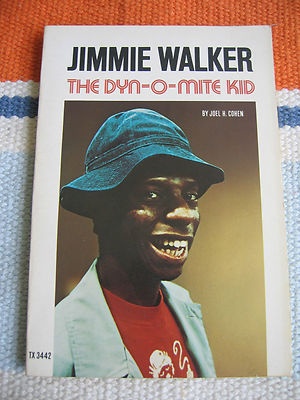
dynomite

No library focusing on military strategy is complete without it.

From Jomini to Clausewitz to Winshield Wiper Man:

if he can just manage to get the hood back down on the Boeing 707 after checking the dipstick.

No need to commit hara-kiri, James Hong.  Just filed under “seppuku”.

It’s 1-1.  Go Spurs Go!


-PD

کلوزآپ ، نمای نزدیک‎‎ [1990)

[CLOSE-UP (1990)]

In the name of Allah…

We enter the courtroom of the world.

Cinema.

To be judged on our veracity.

But also to be judged for our passion.

Hossain Sabzian had passion.

Here.

And his story is so similar to mine.

Maybe you feel it too?

Dear cinema friend.

Because I will have to invent a new category for this movie.

Loneliness.

Hardship.

Woody Guthrie woe.

Hossain Sabzian plays himself in this story.

It is the truth.

At least as truthful as the novels of Henry Miller.

Real life.

کلوزآپ ، نمای نزدیک‎‎

The world is under the microscope.

How would Debord start his bible about the spectacle?

With that quote from Feuerbach.

A preface as preface.

From Das Wesen des Christentums.

It deserves to be repeated in its entirety.

“But certainly for THE PRESENT AGE, which PREFERS THE SIGN to the thing signified, the COPY to the original, representation to reality, the appearance to the essence…ILLUSION ONLY IS SACRED, TRUTH PROFANE.  Nay, sacredness is be enhanced in proportion as truth decreases and illusion increases, so that [*] the highest degree of illusion comes to be the highest degree of sacredness. [*]”

Those are my notes.

My copy.

My marginalia.

I could autograph it for you.

But the words are by Ludwig Feuerbach.

Having gone through translation from German to English by Donald Nicholson-Smith.

So what?

I haven’t even named the film yet.

Or the director.

Rather, I haven’t named the film in English.

Substance has been subjected to style.

Style has no translation.

Close-Up.

By Abbas Kiarostami.

One of the few geniuses in the world.

You will find on my site the review for طعم گيلاس

Who’s reading?

Taste of Cherry.

I thought that surely no film by this auteur could top that, but I was wrong.

The depth of Close-Up completely defies what I thought was possible with cinema.

It is a shock.

I am at a loss for words regarding how much this film affected me.

It is as beautiful as a bus stop.

As poor as a paper bag.

The roses from the leaf pile are a good start.

All over the world.

We play “kick the can”.

Don’t ever let people lie to you about Iran.

What is the truth?

The truth is that there is a genius there who speaks directly to my heart…like no other.

That genius is Abbas Kiarostami.

But we must mention Mohsen Makhmalbaf.

He is perfect.

It is unbelievable.

Do you know how I would feel to meet Jean-Luc Godard?

Hossain Sabzian knows.

To meet the person who gave us hope…who depicted our suffering.

Bicycleran.

بايسيكلران

Or the blessed marriage promised long ago.

We, are on the outside looking in.

Farsi mocks us.

With its beauty.

There is a lump in my throat like a piece of coal.

Do we really care about Oriana Fallaci?

Or rather Peter Bogdanovich?

Interesting that you should ask.

At first we see Haj Ali Reza Ahmadi annoyed, but later we see him as remarkably humane.

This is the Iranian legal system.

We are told it is a civil law system.

In the name of Allah.

How does a country produce such beauty?

Hossain Farazmand.

Everyone wants to be on TV.

It must be difficult to read my writing.

Who cares if you listen?

Now that IS a quote (or misquote).

Milton Babbitt.

Twelve-tone prose.

My beloved concision.

Fighting my windbag tendencies.

It is supposed to be funny.

Like Mauricio Kagel.  Or Francis Poulenc.  Or Conlon Nancarrow.

Must I mention Satie?

Yes, I must.

In the name of Hossain Sabzian.

détournement

Making the job of the DGSE almost impossible.

Ever since the Place de la Contrescarpe.

Les moineaux?  Chez Moineaux?

Trouble makers.

Like the glorious Kiarostami.

But he left us this document.

And he lives at the young age of 75.

Yet, the Situationist is Hossain Sabzian.

Like Arthur Cravan.

But more like Erik Satie.

Life?

Life is hard.

Is it like Film International?

Or like Massoud Mehrabi?

I don’t know.

But I know someone was on the same page mentally.

Because F for Fake (my second most favorite film of all time).

That is the language of cinephiles.

We’ve lost the sound.

Fifteen years ago.

-PD

Kanał [1956)

I feel like this film.

Every day.

But it might as well be today.

Trudging through excrement.

There is no kindly way to put it.

War.

I do not know.

Resistance.

I do.

Give me that wedding ring.

No thing of value will perish with you.

It is hard to keep your thoughts clear in a sewer.

Surely lighting a match is unadvisable.

But we only know the Merry Christmas war.

Shitter’s full.

The miserables.

Henry Miller may have imagined it too late.

As Robert Schumann said, you must only think of a melody and write it down.

Or remember a melody that no one else has remembered.

I don’t know.

It’s hard to think down here.

With these fumes.

Starved for oxygen.

But we have a real story.

Teresa Iżewska is all but forgotten in the English-speaking world.

What a shame.

Because she conjures a dying palliative.

Don’t open your eyes, Saul.

Let me describe it to you.

There is a Bechstein piano with the left front leg missing.

Kissing the ground.

And the composer goes to work.

The focal point of our story.

Władysław Sheybal or Vladek Sheybal.

He brings the movie to life along with director Andrzej Wajda.

Yes, I fell in love with Polish films because of Popiół i diament.

And now we come to Kanał.

The sewer.  Sewers.  Dante.  Hell.

“Piano music should only be written for the Bechstein.”  –Claude Debussy

But did he say it in English?

Surely not Polish.

And so we celebrate our heroes now in our resistance.

Andreas von Bülow, for instance.

And we turn our ear to the acoustics of this torture chamber.

Thanks to Hans von Bülow.

You probably know Sheybal (if at all) as Kronsteen of From Russia with Love.

Yes, the early Bond films had credibility.  Class.

Goldfinger employed Gert Fröbe (whom I should have mentioned for his small-yet-comedic role in Mr. Arkadin).

And now we still have great actors in the Bond films…Daniel Craig (yes, I believe he’s truly special), Jesper Christensen (an acting god!), Ralph Fiennes (another holy)…even Ben Whishaw when he doesn’t have shite lines.

And who doesn’t love Léa Seydoux?

But to this formidable ensemble was added the raw sewage/faux talent of Christoph Waltz.

Likewise, John Logan, Neal Purvis, Robert Wade, Jez Butterworth…these four fell far short of the mark in Spectre that Jerzy Stefan Stawiński set with Kanał.

I mention Spectre because I have been reconsidering my harsh review of it.

But, dear friends, much of my revulsion concerning Spectre remains (even after a second viewing).

On the other hand, a film literally steeped in shit (Kanał) has stood the test of time for 60 years.

ATTN:  James Bond franchise (Eon Productions), Hollywood, et al.

Stop stopping at Hitchcock.

Sam Mendes.

Your rips of The Birds and North by Northwest did not go unnoticed.

But why not delve deeper into film history?

Wanna help bring down the surveillance panopticon?

Gonna have to try a lot harder than that.

The façade won’t crumble with half-assed efforts.

Start here, perhaps.


-PD


Mr. Arkadin [1955)

I am a bad film critic.

A good, bad film critic.

Because this is one of those films which requires a certain attention to detail.

Get the damn title right.

So what is it?

I have just watched the British version…we’ll call it (adhering to common practice) Confidential Report.

I had seen this once before.

To me it was always Mr. Arkadin.  I didn’t realize the level of controversy surrounding this film’s numerous versions.

But let me point something out.  All of the versions are within a few minutes of each other.  Sure, some are in Spanish.  That makes a difference.  But at a certain point it is splitting hairs.  Either you’ve seen this thing or you haven’t.

I can understand the legalistic approach to film preservation when it comes to this picture.

If the whole thing isn’t presented as a flashback, I can see how the composition might be negatively affected.

But who cares?  Bogdanovich?  Sure…I care too.

And so let’s get around to why one should even care in the first place.

This is a magnificent movie!

I didn’t really think so the first time I saw it.

It’s possible to see this film and be caught in a The Big Sleep haze.

So maybe it does depend on the version.

Maybe the film isn’t supposed to be confusing.

Yet, there’s something nice (pleasant) about being confused.

If this was a universal maxim, I would walk around with a smile on my face perpetually.

But the confusion here is a rare sort.

When I first saw Mr. Arkadin I mainly “retained” (absorbed?) only its mood.

Something was happening.  Orson Welles was a shadowy character.

There wasn’t a sense of continuity.

But here’s another possibility.

This film needs (deserves) to be seen more than once.

The action moves fast.

Weird things are afoot.

The whole film is a sort of riddle.

And the symbolism is as stinky-strong as Roquefort.

Wikipedia might lead you to Basil Zaharoff, but my mind was wandering more towards George Soros and/or Rupert Murdoch.

Even Jeff Bezos…these guys who feel compelled to protect their corporate empires by buying the Wall Street Journal (or Washington Post).

We make fun of Kissinger because he got the Nobel Peace Prize.

We make fun of Obama for the same reason.

Neither deserved it.  [the prize]

It is as repugnant as Orwell’s Ministry of Truth.

But really, we are dumb.

We Lumpenproletariat.

Lumpy Gravy.

We lump together Kissinger with Brzezinski.  And then we throw Soros in for good measure.

And to top it all off, we place Murdoch like a cherry atop the mystère.

There is no mystery.

Bouvard and Pécuchet are aghast.

Maybe he was born in Muğla.

Perhaps he died in Monte Carlo.

Methods.  Experiments.

This is the dossier on Mr. Arkadin.

You are paying to have yourself spied on.

Whether you like it or not.

Because, with all you have been through, you can’t even remember your real identity.

Oh yes…the tired trope of super-soldier pap and shows like Blindspot.

We almost buy it.

It goes a long way.

But it falls short.

Too few comma splices.

Yes, too few.

I will, be, here with Pynchon.  Is not a comma splice.

This is approaching the time in which firemen SET fires.  Bradbury.  Truffaut.

And among the contraband is Tropic of Cancer.

Yes, my heart rends a bit.  As I reach out.

Julie Christie…the rumors are true.

A shamus hired by a murderer.

Belgrade.  Zürich.

Orson Welles is painting a portrait of Europe.

Corruption.

A song for Europe.

Mother of pearl.

They say Rothschild came in.

Always came in.  But with a nice glass of Lafite.

ONI was sniffing around.  They were the first.  Good old chaps!

War profiteering runs all through the story of Basil Zaharoff.

And Orson Welles borrows this story artfully.

As when Patricia Medina is drunk on the yacht.

All through the film.  Those expressionist camera angles.  Vertov.  Ruttman.

But with the wine…more sinister.  As Arkadin is lucid.  Listening.  Gathering intelligence.

DYB.

We need a new generation of jet fighters.  Though the last generation never saw action in a real war.  Hasn’t been a real war since WWII.  Profiteers are restricted in their movements.

The Spanish Empire finally collapsed because of this corruption.  Will it happen in the exact same manner to the United States?

The parallels are more similar than Rome.

It is too much.  The shoddiness of these machines.  I must stop here.


-PD


Austin Powers: The Spy Who Shagged Me [1999)

This one is painful.  No getting around it.

Mike Myers is a very talented guy, but this film is seriously lacking in creativity.

I get it…  The James Bond series is very formulaic, but a spoof franchise can’t afford to be so predictable.

And thus it is little wonder that Austin Powers only lasted three installments.

But to be fair, let’s give this film a chance.

Austin starts out learning that his luck was too good to be true.

Elizabeth Hurley.  Not a professional model until age 29.

Speaks of a certain beauty.  Timeless.

Perhaps.

Daughter of Angela Mary Titt (!)…you can’t make this stuff up.

Bruce Beresford cast Hurley in Aria (1987) [a compilation film which happened to feature a vignette by my idol Jean-Luc Godard].

Aria was her debut.

Ok, enough about Hurley. She’s not in much of this film, but I really did her a disservice by completely failing to mention her performance in the first Austin Powers movie.  Really, she is a fine actress and her contribution to that movie was significant and impressive.

By now you may be noticing that the current film under consideration (installment two) must be quite a clunker for me to be going on about an actress who appears in about ten minutes of this feature.

If you have surmised thusly, you have surmised correctly.

Moving on…

There are moments in this movie when things briefly coalesce.  Dr. Evil’s headquarters atop The Space Needle hosts one such moment.  The schadenfreude I felt as a patron of a particularly lackluster Starbucks (watch the movie) was, in this scene, among the highlights of a rather limp film.

There is, of course, the addition of the 2′ 8″ Verne Troyer in this installment.  Troyer does a fine job as Mini-Me.

Even the Fat Bastard character is entertaining (up to a point).

I suppose that is the M.O. of the Austin Powers franchise: to go beyond the limits of ridiculousness and good taste.

When it works, it’s quite special.  When it doesn’t (as in most of this film), it’s a rather tragic affair.

Unfortunately, Rob Lowe is not really allowed to shine in this film.  His comedic gifts deserved better.

One player who makes the most of her small role is Kristen Johnston.  Kudos to her for making the sport of chess as exciting and bizarre as Marcel Duchamp and Henry Miller would have done had they wound up in this shambles of a film.

And now on to the bright spot of the film:  Heather Graham.

Yes, I know…I know.

Though it’s not as powerful as her breathtaking performance in Boogie Nights, it’s not a bad performance.

No…far from it.

Graham takes the charm of Elizabeth Hurley and ratchets it up a few notches.

But the story…oy vey, the story.  Really, there is no story.  The same story.

It’s pretty sad when a spy spoof is less entertaining than a Bond clunker such as Moonraker.

Back to Graham…anyone who’s dated Adam Ant is alright in my book.

Pushing onwards…

Dr. Evil at least happens upon the perfect name for his doomsday laser:  The Alan Parsons Project.

Like the evil Starbucks Space Needle, it is one of few highlights.

One of the few storyline threads to come through intact is the one involving Powers’ mojo.

Unfortunately, the naïvete of enlightenment which somehow alighted upon the first Austin Powers film is not present here to sustain the promising premise of mojo lost and found.

Strangely, the series itself seemingly lost its mojo in this its sophomore slump.

There’s one final twist at the end involving Fat Bastard.  For a moment the film threatens to redeem itself.

But alas, as they say…

-PD

Mulholland Dr. [2001)

How not to start a symphony.  With a rest.  #5 (7)j j-j o ^ (7)j j-j o

Beethoven started with a pause.  A pause, in this case, is unheard.  Felt.

No hay banda.

Il y a n’est pas d’orchestre.

I wish I was more confident in my French memory.

The Spanish is simpler.

[silencio]

It could be Roberto Benigni in La vita è bella reeling off a priceless punchline.

[silencio]

It could be John Cage forcing us to listen in 4’33”.

Painfully good.  A perfect film.  Mulholland Drive.  Dr. Mulholland.

I’ve either gained you or lost you by this point.

Dr. Benway.

You will excuse the word virus at work.

Perhaps the word bacteria predates Burroughs.

Always a cut-up in class.

And those classy suits.

It’s a talent to be weird, though Charles Mingus would argue otherwise.

A talent to be simple.

You have to stay with me like Lord Buckley or Lester Bangs.

I got yer Oxford comma right here.

, and don’t I know it!

She takes Hayworth’s name from Gilda.

Rita.

Laura Elena Harring.  Laura Harring if you’re into the whole brevity thing.  Concision of expression.  Bthvn.

If you really wanna impress the familia, it’s Laura Elena Martínez Herring.  Miss USA 1985.  Just missed 1984.

Or well, Wilbur…

Mr. Ed.  Paging Mr….

Herring.  Pink.  She is a living Modigliani onscreen for a brief moment on a couch.  A stippled nipple in deep focus.

But this is not her film.  She is a MacGuffin in heels.

No.  This is Naomi Watts’ film.  Boy is it ever!

But let us pop this balloon before it goes all Vivre sa vie on us.

Is this the best Amer-ican film ever made?  Probably.

Dog Star Man has a steep mountain to climb without a soundtrack to blow Sisyphus to his zenith.

F for Fake is to American cinema what Histoire(s) du cinema is to the French pantheon.

The only real challenger, then, might be Gummo.

But let us return to Maestro Lynch.  David Lynch.  Montana Dave.  The Cowboy…

This is, to reiterate, a perfect film.  Such creations do not come along often.

As such, we should savor each morsel of finesse embodied in this feast for eyes and mind.

And don’t forget the ears.  Badalamenti.  Badda bing, badda boom.

What would Chico Marx have made of this film???

Who cares…  It’s Chico stuffed into a dough ball suitcase with $50k and Groucho and Harpo mashed up

with even a good portion of Zeppo as Little Mr. Sunshine in Naomi Watts’ first character Betty Elms.

Nightmare on Elms’ street.

Mulholland Dr.

Great minds think alike.  Cannes premier of this film May 16, 2001.  Radiohead’s Amnesiac album?  June 5, 2001.

Rita.  Camille.  Diane Selwyn.

Kryptos.  Jim Sanborn.  Mengenlehreuhr.

Set theory.

(0,2,3,5)  Le Sacre du printemps.

Spitting espresso into a napkin, strikes fear in the hearts of the most hardened capitalists.

Fear.

The Flower That Drank the Moon.  Not a real film.

The Big Sleep.  She.  H. Rider Haggard.  Angel-A.

Finnegans, upon waking, diapasoned Wachet auf.

Just call me Death.  Everyone else does.

We don’t stop here.

We push on.  Like Gene Wilder on a magical fucking river of chocolate.

You can’t split the existential atom any further.  Kubrick tried in 2001.  And now Lynch had arrived at the same year.

If you open a MacGuffin, you will find nothing.

I have a bag full of money and I can’t remember my name.  That is Hollywood.

This is the girl.

And the gun.

24x per second.

Truth before the big lie even sprouted wings.  L’Effroyable imposture.  Vérités et Mensonges.

It’s like the old Edison tone tests.  Hit the lights.  Who’s playing?  The phonograph or the violinist?

Like looking at L.A. through Roy Orbison’s glasses.  A blur…a haze.

No one has split the literary atom any further than Louis-Ferdinand Céline.

[…]

Those three little dots.

The rhythm of speech.  From Modest Mussorgsky to Harry Partch.

Boris Godunov was lousy so we had to shave his armpits.

We would have never gotten to know each other so well, Boris and I.  Henry.  Mr. Bones.

Yeah, I keep on sloggin’ and get diminishing marginal returns.

Just a fancy way of saying less and less.  Nothing (more or less).

And then nothing turns itself inside out.

Naomi Watts goes from gee swell to Valerie Solanas.

The key.  CERN.  When they rev it up.

What does it open?

Möbius (stripped bare by his bachelorettes), even

[The Large Hadron Collider]

Mimesis.  Die a Jesus.

Greatest goal in life?

To achieve immortality and then die.

J. Hoberman.  J. Mascis.  J. Spaceman.

Putrefaction is merely Der Untergang des Abendlandes.  The decline of the evening lands.

Rises east, sets The West.

Civility.

L’Usine de rêves.

That killer blonde that we all want.  From Kim Novak to Daniel Craig.

Monty Montgomery.  Hope you only see him once more.

Good v. Bad, 410 U.S. 113 (2001)

The abortion of Newtonian physics.

Twice.

Thrice.

Michael J. Anderson as Larry Silverstein.

We don’t stop here.

This is the girl.

Maybe the smartest thing to do is pull it.

And we watched the building collapse.

That would be the shadow government.

An accident is a terrible event—notice the location of the accident.

Who gives a key, and why?

-PD

Passion [1982)

All you need is the first word.  The first sentence to get you going.

You can meditate.  Think too hard.

And now that it’s started it is gloriously ruined.  Like Kind of Blue.

Miles Davis would tell his players…one take.

Perhaps there were caveats.  But Bill Evans was ready.  Coltrane…

It is the same with “Sister Ray” by The Velvet Underground.

One take.  Make it count.

Everything proceeds from the first word.  But don’t take it too seriously.

It is like many other first words.  “Once upon a time…”

From a mist rises Beethoven’s 9th Symphony.  Bruckner would use the same device many times (no doubt in honor of Ludwig van).

Yes.  We say Ludwig Van in honor of Mauricio Kagel.  And the entire spirit of everything here might be compared to Joseph Beuys.

And just like that <bam> we go over-budget.

Jerzy Radziwilowicz plays the Jean-Luc Godard character here (with the wardrobe ostensibly taken right off the back of Jacques Dutronc).  Thus Godard still creates a distance between his story and THE story.  The whole bit about Poland is made to throw us off the scent (a bit like the glorious obfuscation of Joyce in Finnegans Wake).

We find Godard to be right.  The available forms are too mundane.  The audience stops thinking when they are comfortable.  So we must disorient them a bit–prod like a brainiac Hitchcock.

You see, the most important thing is not who acted in this film.  Rather, the crucial component is the juxtaposition which allows for revelation.

We see the most perfectly-placed tableaux of human paintings.  Come to life.  The proper term is tableau vivant.  Maybe you see them at Christmas.  Perhaps a manger and the Christian genesis.

Ah, but with Godard it is Delacroix and Rubens and Rembrandt etc.  I assume Ingmar Bergman missed this Godard film because the former had already made up his mind regarding the latter.  And thus the admiration flowed in one direction alone.  We see the delicacy of Bergman–that technique of the long shot (temporally speaking).  You can almost imagine Godard telling his cast of thousands in this mini-epic to have no expression at all.

There is a connection to Stravinsky.  Neoclassicism, but really a radical belief in the purity of music.  To paraphrase Igor, “Music doesn’t have meaning.  A note is a note.”  Perhaps I have done the great composer an injustice with my memory.  Yet, a paraphrase is a paraphrase.

We humans are not computers.  No matter how many books we have.  No matter how steel-trap our memory.  No matter how fast our Internet.

And thus, that which is juxtaposed against the meticulous composition of the tableaux vivants?  Everyday life.  Careless shots.  The beauty of the sky.  The natural sway of a handheld camera.  The sun as it burns up the lens upon peeking through the bare trees.  Hanna Schygulla running through the snow with a lavender umbrella.

Real life.  Labor.  A factory.  And who is the real star?  Isabelle Huppert.  Her character in Sauve qui peut (la vie) was not a sympathetic one.  Can we say?  WE had no sympathy for her.  Very little.  Not none.

Yet here…she is the lamb of God (of which she speaks).  Huppert is the labor element.  Workers’ rights.  It is intimated that her monotonous job has caused her to stutter.  Why?  Because it is not easy to talk about the factory.

And why, she asks, are people in films never shown working?  It is not allowed.  Filming in factories.  Indeed, I believe there is a specifically French meaning here.  [And Swiss, as the film is shot in Switzerland.]  But the real shocker?  Work and sex (“pornography”) are equally prohibited on the screen.

Only Godard would find this fascinating link.  And that is why we love him.

But mostly it is another thing.

Life is so much richer in the films of Godard.  Sure, there are some exceptions, but the exceptions themselves are merely the process being revealed.  It is “the thinking life” to paraphrase Henry Miller.

Once you have been there, you don’t want to go back.  Or you can’t go back.  But we do go back.  Thinking is hard work.

And as the world bemoans what havoc Europe has wrought, let it be noted…the Beethovens, Mozarts, Dvoraks…

This is the humanism which little by little comes to occupy the mature films of Jean-Luc Godard.

Most importantly, he never stopped being a critic.

And his film reviews?  They are his films themselves.

-PD

Jamaica Inn [1939)

This film is even more disgusting than Psycho.  Disgust.  Fear.  Anxiety.  Moral ambiguity.

This is what made Hitchcock great.  Like Dostoyevsky, Hitchcock brought to life those personages who were between good and evil.

In the words of Henry Miller, “They were alive and they spoke to me.”

Authors.  Real authors.  Blood and guts authors.  Authors who left everything on the page.  Every shred of emotion.

Samuel Fuller would have been proud of such authors.

We must remember Fuller’s cameo from Pierrot le Fou.  His words are instructive:

“Film is like a battleground. Love. Hate. Action. Violence. Death. In one word . . . emotion.”

And though Hitchcock was perhaps the greatest film auteur to ever live, we must not neglect the source material.

Though auteur theory would argue otherwise, it was indeed Daphne du Maurier who concocted this perfect story.

And, as another affront to the politique des auteurs, we must acknowledge that this film would be far less powerful were it not for the all-world talents of actors Charles Laughton and Maureen O’Hara.

For those wishing a parallel to Ian Fleming’s Dr. No (set in Jamaica), this film has absolutely nothing to do with Jamaica.

Jamaica Inn is merely the name of the roadside lodging in this period piece set in 1819 Cornwall.

But like a good James Bond film, a believable villain makes all the difference in sustaining the dramatic tension.

Laughton is just that villain.

Though Jamaica Inn is not as powerful and iconic as Hitchcock’s The Birds, it is (in my opinion) a strong competitor against his film Rebecca.  And why focus on these three films exclusively?  Because they were all from du Maurier stories.

What is more, I would argue that Jamaica Inn is every bit as good as The Hunchback of Notre Dame (1939).  Why that comparison?  Because it featured the same duo (in the same year):  Laughton and O’Hara.

As for O’Hara, this was for all practical purposes her true film debut (in a starring role while assuming the screen name with which she would become famous).  For all of my effusive praising of Saoirse Ronan, it should be noted that Maureen O’Hara was a sort of Irish prototype for the panache Ronan would bring to the screen these many years later.

But nothing tops Laughton here.  Hitchcock was still honing his skills towards a mature style.  Laughton creates a character both laughable and hideous.  It is not the visceral aversion of the Hunchback, but rather an elite, condescending, corrupt local squire (and justice of the peace).  Laughton is the law.  He relishes his position as he savors his victuals.

Life and simulation.  In real life, Laughton fought for O’Hara…insisting she be given the lead role (and her first, as noted earlier).

It should be noted that past critics have eviscerated this film.  Let it be noted that their pretensions are largely unfounded.

-PD

Vivre sa vie: film en douze tableaux [1962)

This.  This was the film which started it all for me.  My fatal love for cinema.  You must excuse me if I write in the tone which Godard employed.  It is one of the most complex branches of his filmlanguagetree.  And you must excuse me if I dabble Joycean here and there.

Really, it all started with a book by James Monaco called The New Wave.  Once upon a time my paperback copy had a cover.  I believe I paid 50 cents for the book…maybe 25.  But that cover is long gone and now my copy begins with page five.  Ah, but it is all so clear in my memory.  It was bathtub reading.  My first successful experiment with this was a few years previous when I’d read Henry Miller’s The Rosy Crucifixion during a particularly impoverished time.  Unemployed and discouraged, I had given up hope of finding gainful employment and, rather, resorted to afternoon baths with the erotic anarchy of Miller to keep me company.

And so it was…about four years ago, that I made Monaco’s book my mental edification during absolutions.  Yes, the book would inevitably get wet, fall in the water…even on the edge of the tub…but as it died, I lived.

First came Truffaut.  Enjoyable enough.  I rented all of his films I could find and imbibed the criticism of Monaco.  Then came Godard.  I had probably seen a bit of Sympathy for the Devil as a kid.  “What is this pretentious shit?!?,” I must have thought at the time.  Indeed, delving into Godard can be a shock in many, many ways.  Much later (as a young adult) I saw my first JLG film proper.  Week-end.  I was blown away by its brilliance, but still I didn’t equate the cerebral invention as specifically Godardian.  No, I chalked it up to the brilliance of the French in general…along with Renoir and Truffaut.

It would take many years before I returned to French cinema.  Girls came and went.  I changed dwellings often.  And as I started to read Monaco’s chapter on Godard I noticed an ad in the Austin Chronicle for a showing of the film in question:  at the University of Texas student union ballroom.  And it was free!

And so I strode off into the night and paid to park my car…it must have been December…a cold night if I remember.  I sat amongst what, at the time, I didn’t realize to be film students.  The whole concept was foreign to me.  It didn’t even register that UT had a film department.  I was a professional musician.  I knew music.  That was it.

And then it started.  “Somebody better check the projector,” I thought (as the sound seemed to sputter in stops and starts).  Something’s not right here.  Is she moving?  Yes!  You can see her lips move.  Wait, I just saw her blink!

And so Godard ushered the world (including Susan Sontag, back in the day) into his third feature film.  Hot off the unexpected success of Breathless and the 180 turn that was A Woman is a Woman, Godard again turned the tables on audiences.  The stark noir is reminiscent of Godard’s first film, but the mood is…moody.

This is, without a doubt, my favorite of Godard’s classic-era films.  I think it is the best movie he ever made.  His great work is Histoire(s) du cinema, but that is really other as Roland Kirk might have said.

We see Godard challenging himself here…filming actors from behind (multiple times throughout this picture).  After two features, he seemed ready to push, push…farther.  But along with these dodecaphonic experiments, there is still the magic of chance (?) like the woman emerging from the alley across the street, running as if late (while Anna Karina and mate play a leisurely game of pinball [another motif, that]).

This entire website owes its visual stamp to the third tableau:  La Passion de Jeanne d’Arc.  Karina sits in a movie theater, perhaps trying to forget her woes, and (to paraphrase Neil Young) she falls in love with an actress…playing a part she could understand.  The mysterious Renée Jeanne Falconetti…who only appears in this film and two others according to IMDB (one being a short, the other a blank page on Wikipedia)…  Suffice it to say that “Falconetti” (as someone in the theater (Godard?) can be heard to say during the silent scene-within-a-scene) is known today almost exclusively for her role in this Carl Th. Dreyer masterpiece from 1928.  As Anna Karina watches Falconetti and Antonin Artaud (also an actor in this film), she is brought to tears in what is the most cinematically delicate and gossamer-perfect moment of Godard’s entire (ongoing) career.

Karina is fantastic in this film.  The cinematic language employed obscures the pathos of her performance somewhat.  We don’t know whether to laugh or cry.  Indeed, in the ending segment of the whole film (think Magazine’s “Shot From Both Sides”) I let out a nervous laugh upon first seeing this in the theater as if I was Joan of Arc in the hands of Jacques Rivette (her funeral, my trial).  It’s amazing though how this movie hits me differently now with some years under my belt.  For all its panache, this really is a sad, sad story.  But in homage to B-movies, it doesn’t take itself too seriously…fumbling over itself like Chaplin bleeding to death.

I can’t/won’t discuss every aspect of this timeless Fabergé egg, but one scene bears mentioning above all the rest:  Nana’s dance.  It is Anna Karina at her best…trying to pretend she’s in a musical and not in a drab neorealist sob fest.  It is Michel Legrand at his best…providing the swagger of a Gainsbourg instead of the syrup which he poured on Demy’s fairy tales.  And it is Jean-Luc Godard at his best…making sure the billiard balls click during the pregnant pauses of a go-go, ye-ye number which otherwise would have seemed overdubbed. Even if it was, they still click.  That is the magic of cinema in the hands of Godard.  It is the jazz of foot traffic…the gambler’s audacious framing of everyday life.

-PD