Top Secret! [1984)

And so we come full-circle.

As in the olden days.

When we first started.

Writing about spy spoofs.

And this is a doozy!

Val Kilmer’s first film.

As Nick Rivers.

Very much Elvis, but equally Beach Boys (at least on the opening number “Skeet Surfing”).

I would call this style of filmmaking “kitchen sink”.

It was a particular type of American comedy in the 1980s.

Fast jokes.

Set pieces.

Elaborate puns.

General silliness.

The setting is East Germany.

In the time of Markus Wolf and the Stasi.

Wolf retired in 1986.

The year after this film (1985), Vladimir Putin started his KGB career in East Germany.

But let’s talk about more important stuff…like how beautiful Lucy Gutteridge is!

A girl and a gun, said Godard.

And for a sequel, another girl and another gun…

Said I.

Port Said.

Fuad II.

Yes, Ms. Gutteridge plays the stunning Hillary.

Which roughly translates to “she whose breasts defy gravity”.

That’s a direct paraphrase.

What?

We almost get the Lawrence Welk Orchestra doing “Sister Ray”, but Nick Rivers and “Tutti Frutti” is close enough to alienate the visiting Russian operatic singer and his caricature faux-Nazi patron.

General Streck.

Not to be confused with Colonel Sturm or Sergeant Drang.

Jim Abrahams and the Zucker brothers (David and Jerry) strung us along the whole time.

And they directed a fairly decent film here…the triumvirate.

The Nutcracker turns out to be a ballet of literal protrusions.

The prop room is equally literal.

It’s both Joycean and daft.

But I had some genuine chuckles during this film.

They execute a priest as a demonstration.

And his Latin is a knee-slapping litany.

A greatest hits of that dead language.

Legal.  Medical.  String it together.  Make it flow.

Pig Latin.  Cow Latin.  Pidgin Latin.

Yes Elvis.  Yes Beach Boys.  And yes Beatlemania.

Sullivan.  Hysteria.  Hip sway.  Swooning.

Is it a bit of Fritz Lang with the magnifying glass?

Certainly prefigures the backmasking of Twin Peaks.

Swedish as a backwards language.

Like those hidden messages on (back to the) Beatles records.

I want to live in that loft of that Swedish bookstore…

clutching a volume of Strindberg and holding a Ms. Gutteridge.

How could anyone dream of more than two fireplaces at the top of a firehouse pole?

Many references.  The Blue Lagoon.  When Brooke Shields was just 14.

Like the Podestas, we end up next in the script at a pizza restaurant.

(!)

“Straighten Out the Rug” pulls out all the stops…and all the rugs…like Pejman Nozad on vitamins.

An incredibly detailed mock-up of the prison grounds complete with a toy train.

Bovine infiltration.

Eggs Benedict Arnold.

When instead of hollandaise, they’ve secretly replaced the sauce with Folger’s crystal gravy (on loan from the struggling PepsiCo).

While Trump protestors boycott every snack and cranny of this MNE.

But the dénouement is the underwater saloon brawl.

It is actually artful.  Postmodern.  High art in spite of itself.  Dodoism.

We must not forget the yeoman efforts of the great Omar Sharif in this film.

Sadly, Mr. Sharif passed away just this past year in his home country of Egypt.

At least he did not (presumably) need two hours of surgery to wipe the smile off his face.

“Who do you root for in the Virginia Slims tournament?”

“I always root against the heterosexual.”

“Do you know any good, white basketball players?”

“There are no good, white basketball players.”

All of this from the “Match?  Lighter.  Better still.” line which Robert Shaw sweated out of someone to fool his way into James Bond’s presence and trust for a short time…before he chose fish with red wine.

One wonders whether the East Berliners had the jelly-faced joy of seeing this arrogant Hollywood slap at the time of its release?

Most importantly, “kitchen sink” was the style of the ZAZ directors mentioned previously:  Zucker, Abrahams, and Zucker.

Kentucky Fried Movie.  Airplane!  The Naked Gun films (with the exception of the last).

This really is a cute film.

And while most of it would have pushed the envelope for 1984, it would almost be a G-rated movie by today’s standards.

Still, there are some jawdropping moments…such as The Anal Intruder (with the Cuisinart on the shelf [in the jailhouse now]).

Turns out the Christopher Atkins character (played by Christopher Villiers) had gotten all the joys of the Russian sailors who rescued him…including sodomy, Karl Marx, Lenin, L. Ron Hubbard, and one more bloke.

And so we wonder…couldn’t the Butthole Surfers have made it into this film?

Just barely.

Three years later they would drop the masterpiece Locust Abortion Technician.

Ah, the Reagan era…


-PD
Airplane! [1980)

My congratulations to Hulu for finally making a move in the right direction as regards comedic movies.

This is a chestnut from my youth.

Directed by Jim Abrahams, David Zucker, and Jerry Zucker, this endless stream of one-liners hits some very special notes indeed.

[flying on instruments]

Ted Striker has a drinking problem…

His aim is off.

It dates back to when he was stationed on the island of Drambuie [sic].

He led the strike against Daiquiri.  We’ll be coming in low…beneath their radar.  Attacking from the north.

[when will you be back?  I can’t tell you that.  It’s top secret.]

Yes, his postwar record is even worse than his war record.

I know the feeling.

Leaves his cab with the meter running.

Striker is always coming in too hot.  Robert Hays.

World record for sweat.

But at least he has his Elaine for whom to hope.  Julie Hagerty.

Avoid the brown acid.  And the fish.

But if you do need a doctor, just look for someone perpetually wearing a stethoscope.

Leslie Nielsen.

Plays it straight as a javelin [donnnnnngggg!].

The cavalry trailing Kramer.

But back to Leslie…from Regina, Saskatchewan.

[Municipal bonds…AA rating…best investment in Canada]

Extremely underrated is Peter Graves as the pilot:  Clarence Oveur.

On the ovarian trolley.

[Have you ever seen a grown man naked?]

and

[Do you like gladiator films?]

or

[Have you ever been in a Turkish prison?]

And of course, the man himself:  Kareem Abdul-Jabbar.

{on this night when my Spurs fell a point shy to the Thunder}

The NBA’s all-time leading scorer (38,387) is Roger Murdoch.

I previously wrote about Kareem’s turn in the Bruce Lee “almost” Game of Death.

Airplane!, then, was his second appearance on the big screen (and first since his kung fu debut in 1972).

Lloyd Bridges picked the wrong week for everything.

All the vices.

From a fag to a swig to bennies to some genuinely Ramones shit.

{now I’m gonna have nightmares about Westbrook}

[How ’bout some coffee?]

[…never has a second cup of coffee at home.  …never vomits at home.]

Robert Stack checks in like Gregg Popovich after a meal at Taco Bell.

[That may have been the lousiest landing in the history of this airport…]

But the absolute secret weapon is the flamingly-gay Stephen Stucker as Johnny Henshaw-Jacobs.

[it looks like a big Tylenol]

[a hat, a brooch, a pterodactyl]

Stucker’s contribution is still alive (though he sadly passed away in 1986 at the age of 38).

And so the queen act was no act.

AIDS.

Shit…

[golly]

June Cleaver speaks jive.

Joey Hammen (Ross Harris) went on to have a very interesting music career which saw his path intersect with Beck, Stereolab, and The Dust Brothers.

[Odelay!]

David Leisure and Kawhi Leonard both went to San Diego State University.

That should definitely help us in Game 3.

But we’re going to need a lot more defense from Ethel Merman.

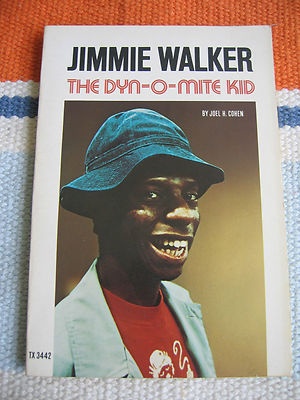
Really, the Spurs need to revisit this excellent tome by Joel Cohen:

dynomite

No library focusing on military strategy is complete without it.

From Jomini to Clausewitz to Winshield Wiper Man:

if he can just manage to get the hood back down on the Boeing 707 after checking the dipstick.

No need to commit hara-kiri, James Hong.  Just filed under “seppuku”.

It’s 1-1.  Go Spurs Go!


-PD

Trading Places [1983)

At one point in my life I could honestly say that everything I knew about business I had learned from the movie Trading Places.

This film came on TV all the time when I was a kid.

And it never failed to pull me in.

But back to business…it’s that one scene:

coffee, wheat, pork bellies, gold, and (of course) orange juice.

Ok, so I mixed up the order a little bit.

But that’s the “breakfast” of commodities which sits before Billy Ray Valentine (Eddie Murphy) as he is given a crash course in commodities trading by the Duke brothers (Randolph and Mortimer).

It always made a big impression on me…pork bellies.

And now as I descend from the halfway point of my MBA studies this film carries a richer meaning for me.

The gorilla comes with a bill of lading.

That’s not the type of stuff you catch as a six-year-old.

And I must admit that this film is all the funnier when the expletives are put back in.

And the nudity.

Yes, it was usually the sanitized version we saw on TV.

But maybe sometimes…on a special channel…the real version.

At any rate, this is truly an American classic.

Not least because it was produced by a true American hero like Aaron Russo.

Why do I call him a hero?

Because he stood up for something worth standing up for.

It’s no wonder.

Watching this film.

The agog camera views of the World Trade Center.

But let’s stick to the teaching tool at hand.

Trading Places was just that:  a beautiful teaching tool.

In some ways, therefore, it is aiming at the same thing as Le Gai Savoir.

The particular argument at issue is the famous “nature vs. nurture” debate.

Perhaps my attempt to connect John Landis’ wonderful film to Godard is a bit of a reach, but there is real, American beauty at work here.

Consider, for instance, the opening montage of Philadelphia streets set to W.A. Mozart’s overture from the opera Le Nozze di Figaro.

Notice, if you will, the African-Americans playing basketball with a plastic milk crate attached to a piece of plywood…on a telephone pole.

There are some loving politics at work here.

What we have is a film about unity.  Dan Aykroyd.  Eddie Murphy.  Black and white.

There was a positivity to many American comedies of the 1980s.

I remember hearing “feel-good” used as a descriptor for movies (particularly summertime offerings) more than I care to remember.

But they were “feel-good”.

Trading Places, however, is more than just a feel-good film.

It is a film with a conscience.

That’s what makes it timeless.

I’d like to imagine that Aaron Russo’s conscience was already ticking…ticking.

It wasn’t until later that he made truly political films.

I don’t want to attempt a more profound framing than this thing deserves [too late].

Suffice it to say that Trading Places is as applicable today as it was in 1983.

We may no longer bandy-about the word “yuppies”, but we still have Wall Street.

Perhaps the trading pits and quote boards look hopelessly antiquated now.

But so much transfers.

Exeter.  Harvard.  Winthorpe.

And, of course, kindness transfers.  Jamie Lee Curtis.

So there you have it.

Trading Places is acerbic criticism on race in America.  Racism.  Opportunity.

Eddie Murphy will have you laughing your ass off.

This is truly an indispensable bit of 80s comedy…and so much more.


-PD

Ljubavni slučaj ili tragedija službenice P.T.T. [1967)

Something draws me to Eastern Europe.  I blame Romania.  Thank you Romania!  Yes, there was something about the ambiance which director Cristian Mungiu conjured up in 2007’s 4 Months, 3 Weeks and 2 Days (4 luni, 3 săptămâni și 2 zile) which has stayed with me for a long time.

Really, it’s a rather mundane part.  Near the top of the film.  The goddess Anamaria Marinca traipses down the hall to find some soap…and cigarettes.  The scene is a college dormitory in communist Romania (pre-December 1989).  Girls in one room chat about beauty products.  There seems to be a good bit of bartering going on.  Marinca is mainly uninterested.  Looking for a certain kind of soap (if I remember correctly).  On the way back to her room she stops off at the room of a foreign student (non-Romanian) who sells cigarettes and gum and stuff.  The whole film she is searching for Kent cigarettes (a few mentions of this brand).  Not surprisingly, there are no Kents to be had in the dorm.  She settles for something else.  Perhaps.  I don’t know.

She stops and admires some kittens which someone has taken in.

It is astonishingly real.  On par with Roberto Rossellini.

Indeed, it might be said that all New Waves (from the nouvelle vague to the Romanian New Wave) have their birth in the neorealist films of Rossellini.

But Mungiu added a new wrinkle.

Marinca.  [The goddess of whom I spoke.]

Marinca is unglamorous.  No one is glamorous in 4 luni, 3 săptămâni și 2 zile.  We get the impression that it is the waning days of Ceaușescu’s reign.

Times are tough.  The policies of the state haven’t worked out so well.  It bears some resemblance to a prison.  Material items take the place of money (reminiscent of cigarettes as currency in jails).

What I have yet to define in this article is “goddess”.  What do I mean by that?

Well, I’m glad you asked!  Marinca (particularly in this film) is a goddess to me because she represents the opposite of the typical American woman in the year 2015.  Her beauty is her soul.  Her beauty is her loyalty to her roommate and friend Găbița.  Her beauty is her dedication to acting.  She is completely immersed in her unglamorous role…and it is eye-watering.

I have mentioned a similar impression (which further solidified my admiration for Romanian films) I got from watching Dorotheea Petre in The Way I Spent the End of the World (Cum mi-am petrecut sfârşitul lumii).  This masterpiece by director Cătălin Mitulescu preceded Mungiu’s Palme d’Or-winning film by about a year (2006).  I was again struck by another goddess of film (Petre) who, with the help of her auteur, created a character also in direct opposition to the meretricious, vacuous ideal of American womanhood in the 21st century.

And so it is that we finally come to the film under consideration:  Душан Макавејев‘s Love Affair, or the Case of the Missing Switchboard Operator.  Dušan Makavejev is Serbian.  Out of deference to his country I have listed his name in Cyrillic script.  Likewise, the title of the film (at the top) is in Serbo-Croatian.  It is a grey area about which I am not completely informed.  Suffice it to say that Croatia seems to generally use Roman letters (as opposed to the Serbian usage of Cyrillic).  It is a bit like the distinction (and writing differences) between Urdu and Hindi [which I have heard described as essentially the same language, but with two different writing systems].

I prefaced this article on Ljubavni slučaj ili tragedija službenice P.T.T. with my own backstory concerning Eastern European cinema because it is relevant to my approach going forward.

Before coming to this, my first Yugoslav (1967) film, I opened up the can of worms which is Czech cinema by reviewing Closely Watched Trains (Ostře sledované vlaky).  Jiří Menzel’s sexually-charged film poem from the previous year (1966) was a major revelation for me.  And so it is that Dušan Makavejev’s bittersweet confection shares more than just a communist framing with Menzel’s aforementioned erotic portrait.

Yes, Ljubavni slučaj ili tragedija službenice P.T.T. is about our old film-school standbys:  sex and death.  I can never combine those two words (in the context of film) without remembering the ridiculously funny scene of Jim Morrison at UCLA screening his student film in Oliver Stone’s The Doors (1991). 

The fictional Morrison, then, would be trying to hop on a nonfictional bandwagon represented by the likes of Menzel and Makavejev.  Morrison’s time at UCLA (1964-1965) not only coincided with the staggered births of “new waves” around the world (particularly in Europe), but also occurred while Morrison’s father (US Navy Rear Admiral [RADM] George Stephen Morrison) was the commanding officer of a carrier division involved in the Gulf of Tonkin incident.

Jim Morrison lived fast.  Entered UCLA in 1964.  Graduated with an undergraduate degree in film in 1965.  Was dead by 1971.  But those years in between…  It’s no wonder Jim had an Oedipal complex (evident in the song “The End” [1966/1967]) when considering his father was involved in false-flagging the U.S. into a suicidal war against communism.  What a disgrace…

No, the real hero in the family was not RADM Morrison, but rather Jim.  He turned on the dream-switches of so many kids.  To put it quite bluntly, he was part of the counterculture in America which caused kids to start giving a fuck about the world and politics and geopolitics and confirmed charades (frauds, shams, etc.) like the Gulf of Tonkin “incident”.  Such a sanitary and slippery word:  incident.

It fits perfectly, in that there was no incident.

But while Morrison the Younger had gone off into Brechtian pop-rock, Serbian director Makavejev was busy making Love Affair, or the Case of the Missing Switchboard Operator.  It is equally stunning, for its medium, as “The End”.

Sex needs beauty.  A really luscious film like this needed Ева Рас (Eva Ras).  She is a bit like Jitka Zelenohorská’s character in Closely Watched Trains…mischievous, bewitching…  But there is one great difference between Ras and Zelenohorska:  Ras is a blond.

Though our film is in black and white, it is clear that Ras’ silky hair is rather fair (a detail which would not have escaped Hitchcock).  It must be said, however, that Makavejev did not give in to the easy femme fatale portrayal when it came to filming Ras.  Izabela (Ras) is a complex individual.  The film tells us that she is Hungarian.  She is different…other.  She needs sex.  She is passionate.

All the same, her portrayal by Ras is poetic and tender.  Really, what we are seeing here is a tentative feminism expressed by Makavejev which would become a thundering symphony of women’s liberation in Mungiu’s 4 Months, 3 Weeks and 2 Days. 

And it is good.  It is good for men to see these types of films.  We men idolize and reify women in the West, but we don’t often enough stop to really observe the trials of womankind.

In the best spirit of socialism, this film has something for everyone…men, women…ok, maybe not children.

Love Affair, or the Case of the Missing Switchboard Operator is really an intense film.  If you have seen (and made it through) Stan Brakhage’s The Act of Seeing with One’s Own Eyes (a film I, incidentally, once made the mistake of showing at a party), then you’ll be alright.  For those faint of heart (I generally fall into that category), there are a couple of rough moments in this film (in the context of criminology).

In all, I am very proud and happy to have seen my first Serbian movie.  As a resident of San Antonio (and fan of the San Antonio Spurs), I feel it gives me a better glimpse into the life of one of my favorite basketball players Бобан Марјановић (Boban Marjanović).  I highly recommend this film…and Go Spurs Go 🙂


-PD

SNL Season 1 Episode 2 [1975)

Leave it to the wacky crew of fledgling SNL to throw a curveball on pitch two.

No.  That’s not a good enough metaphor.

Rather.

It’s like a hard rock band which decides to “break it down” two songs into their set.

Yeah.  That’s a little better.

This one.

Really has an off-the-cuff feel of experimentation.

Like, “Hey…Garfunkel is in!  Garfunkel is in!”

Yes, this is really a musical special rather than a true Saturday Night Live episode.

I must be honest.

Paul Simon starts out pretty bland.

I was skeptical.

I mean, I like the guy, but the first couple of songs are a little clunky–a little underwhelming.

But then things pick up.  Big time!

I’ve always heard “Bridge Over Troubled Waters” as a magical song.  It is other.  And though the mellow duo of Simon & Garfunkel don’t play that particular tune on this show, they go to that magical other place for a string of songs.  “The Boxer”…”Scarborough Fair”…it is bloody jawdropping.

Just these two dudes.  No band.  Nothing to cover for flubs.  Paul with his fingerpicks on.  Never misses a note.  And Art with his delicate voice…as poised as his Bob Ross hair.

And the songs!  My God, the songs!  The lyrics about “the boxer”…this passage in particular:

And he carries the reminders
Of ev’ry glove that laid him down
And cut him till he cried out
In his anger and his shame,
“I am leaving, I am leaving.”
But the fighter still remains.

Goddamn.  Those last two lines.  I’m leaving, but the fighter still remains.

And then those opening fingerpicked notes of “Scarborough Fair” with the capo midway up the neck.  So delicate.  So many blurred harmonies.  Like a clavichord.

But hold your horses!

Randy Newman is here too.  At the piano.  Doing “Sail Away”…and those lazy, studied dissonances reminiscent of Charles Ives.  And the words…as delicate a political statement as Chuck Berry’s “Back in the USA”…

To break things up, Paul plays Connie Hawkins in a game of one-on-one basketball with Marv Albert getting the sideline interview.  What a bizarre and hilarious bit!!!

But the song that really got me was “Marie” by Paul Simon (actually a Randy Newman composition).  I’ve loved you since the moment I first saw you (or something like that).  Man…  This guy!  And that song…

I will admit that I never really “got” Simon & Garfunkel till I saw this episode.  And Paul Simon I knew mainly from the later stuff…the great albums like Graceland and Rhythm of the Saints.  Like I said:  some of Paul’s solo stuff falls flat, but on the whole the guy is one hell of a talent!!!

Phoebe Snow didn’t do as much for me here as Janis Ian did in the first episode, but hey:  the lady was seven-months pregnant.  There’s no doubt Snow had a truckload of talent.  The repertoire was a bit questionable, but that might not have been her fault.

Also, before I forget:  Art’s solo rendition here of “I Only Have Eyes for You” is otherworldly.  Nobody does it like that anymore!  Truly a fount of inspiration!!

And so there’s very little Chevy Chase, no Aykroyd, no Belushi…but it was kinda worth it for the musical happening which transpired.

A nice curveball 🙂


-PD


Game of Death [1978)

Panopticon.

Self-censorship.

Can’t leave well-enough alone.

Yes.  In America we have our heroes of the Revolution.  George Washington.  Paul Revere.

But here…we have a sad goodbye to a great hero for Hong Kong.

Thus begins the Bruce Lee apochrypha.

It starts very bad.  Some of the editing seems straight out of the Tim and Eric Awesome Show.

But it gets better.  Way better!  No, this is not a great film.  It’s not even really a good film.  But for fans of Bruce Lee it is worth watching for several reasons.

I must admit:  Bruce Lee brought about a change in my innermost being.  I know that sounds naïve.  I owe some credit to Shaquille O’Neal.  I just happened to catch an interview between Shaq and Yao Ming in which O’Neal admitted that his passion for basketball stemmed from being inspired by Bruce Lee.

Having recently seen Lee’s canonic oeuvre when I came across this interview, it made total sense to me what Shaq was saying.

And that brings us to one of the highlights of Game of Death:  Bruce Lee vs. Kareem Abdul-Jabbar.  Yes, the NBA’s all-time leading scorer indeed plays a fairly significant role in this film.  What is more, this gives me the opportunity to reach out and wish Kareem a speedy recovery as he has just recently undergone coronary bypass surgery.

It actually is amazing that director Robert Clouse put together a semi-watchable film from what little he had to go on.

Hugh O’Brian is pretty good in this.  It’s just a shame that his acting talents go to waste in dialogues with body doubles.

If I haven’t made it abundantly clear, let me clarify:  Bruce Lee was no longer alive when this film was being put together.  Though Lee filmed portions of it, his absence presented a particularly insurmountable problem.

It pains me to say this, but it really is the ensemble cast which keeps this film afloat when it should lag and sag from Lee’s missing contribution.  Dean Jagger is a disgusting psychopath who reminds me of what I imagine Donald Rumsfeld to be like behind closed doors.

The biggest saving grace is Colleen Camp.  She looks so beautiful in this film!

As for there being a conspiracy involved in the demise of Bruce Lee, I don’t doubt that for a second.  Unfortunately, it is not a subject on which I have any pertinent knowledge.

We fans can continue to gain inspiration from the anti-fascist characters Lee embodied.  His short life brought such joy and exhilaration into the world.

-PD