Män som hatar kvinnor [2009)

Research will be the star.

QAnon.

You must know the history of Scandinavian film to understand this movie.

Wild Strawberries.

Nordisk Film A/S [later].

Sjöström = Taube.

But also Nyqvist.

Flashbacks to idyllic female visions.

WarGames.

B2 = Bill Barr.

Stealth.

No leaks.

No deals.

Durham.

Twin Peaks.

Laura Palmer = Harriet Vanger.

Photograph.

Speaking from beyond the grave.

The gaze.

Always return to the photo.

Motif.

Vertigo.

Hire the investigator.

So close.

Who will it be?

4 Months, 3 Weeks and 2 Days.

The bathroom tile.

A sickening act.

Whore bath.

Survival.

JFK.

Retracing steps.

Book depository.

George H.W. Bush.

Of the CIA.

In Texas.

In front of depository?

Study the photo.

Study the angles.

Jim Garrison.

Blowup.

Resolution.

Strangers on a Train.

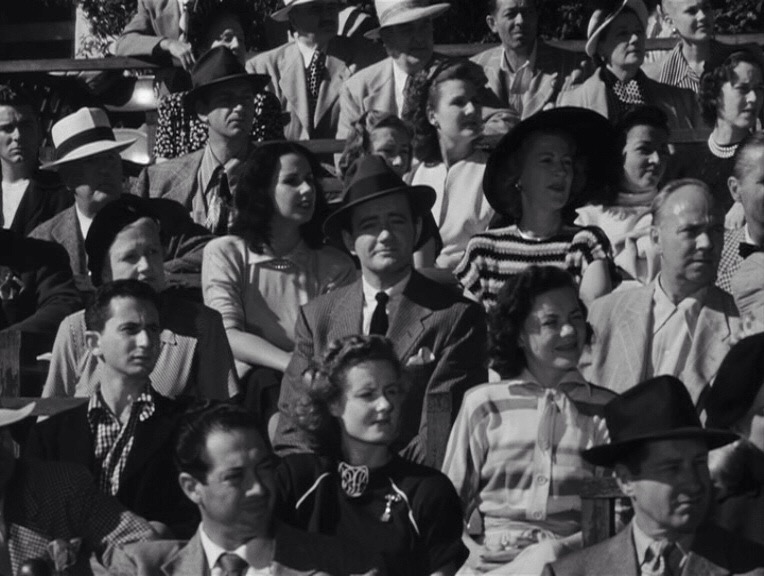
Robert Walker is uninterested in the tennis match.

tennis

What is he so (dis)interested in?

Hard Candy.

Consequences.

Cryptography.

Codebreaking.

Kryptos.

https://en.wikipedia.org/wiki/Kryptos

Key (book).

National Treasure.

Research will win the day.

Serial killer.

Black Dahlia.

Elaborate dissection.

Exquisite corpse.

Lost Highway.

The hunter has become the hunted.

Vengeance (is mine).

Revenge.

Vigilante.

BTK.

“factor X”.

Refer to the possession of Ray Wise.

Justice.

Silence of the Lambs.

Ted Bundy’s photographs.

Symbolism will be their downfall.

Ordet.

Rising from the dead.

Visionary + nerd.

Cage.

Riley.

2011 Norway attacks.

Youth summer camp.

In a cage while they had dinner.

Podesta basement.

For “film installations”.

Ayoola Ajayi inquiring about soundproof basement.

Hell is hot.

Vredens dag.

The things that make people crazy.

And yet the survivors press on.

Requiem for a Dream.

Niels Arden Oplev directed a magnificent film here.

Noomi Rapace is marvelous.

Michael Nyqvist is perfect.

https://www.theguardian.com/uk-news/2020/jun/03/german-prisoner-named-as-suspect-in-disappearance-of-madeleine-mccann

-PD

Rich and Strange [1931)

Though the plot is relatively banal at times, this has to be one of the most bizarre cinematic concoctions ever.  The love stories which spin out from a troubled marriage are but the branches of this unwieldy tree.  Most importantly, this early Hitchcock film should not be overlooked as a superfluous, amateurish outing.

From the first moments we are thrust into the world of René Magritte.  The automata in their bowler hats rush from their clerical jobs and dutifully unfurl their umbrellas at the door before stepping onto a street in London.  All but one.  Poor old Fred (Henry Kendall) is having a rough day at the office and the roughness starts to really get going in earnest once he has clocked out.  Yes, Fred’s umbrella does not open.  On the Tube ride home he makes a series of mistakes due to poor balance.  As he reads the day’s paper with great effort he manages to give our auteur the perfect occasion to segue into the drama proper:  a headline inquiring as to the reader’s satisfaction with life.

Yes, Fred’s umbrella eventually opens…at his own doorstep!  As he enters his humble flat, having been soaked to the bone, his good wife industriously sews a new dress on a hand-cranked sewing machine.  Fred is disgusted with life.  He wants to get away.  To the sea!  Like clockwork, movie magic has a letter arrive in the post informing Fred that a relative is going to give him what’s coming to him in a will early so he can travel and see the world.  Fred and his wife Emily (Joan Barry) are set!

And so they take to the channel.  To Paris!  It becomes obvious early on that Fred has a problem with ocean travel.  For a great deal of the film (an around-the-world voyage) he will be laid up in his cabin too seasick to bat an eyelash.  Emily tries to make the best of it.  A kindly Commander Gordon (Percy Marmont) graciously keeps Emily entertained as her husband wiles away the hours in agony.  Gordon quickly begins falling for Emily.

After Fred finally gets his sea legs, his nouveau riche blindness leads him to follow after a German “princess.”  Soon Fred has far outpaced Emily in adulterous dealings.  The truth of the matter is that Emily feels guilty and doesn’t do much wrong.  Fred, on the other hand, goes head-first into playboy mode.  As the drama plays out, we feel sympathy for the continuously jilted Emily as well as for the sincere Commander Gordon.  Fred becomes more and more revolting by the day.

But this film really gets weird after we find out Fred’s “princess” is no princess at all.  After making off with 1000 pounds sterling, she hot-foots it to Rangoon.  Fred and Emily are then left to hobble back from Singapore to London on a steamer.

The steamer, apparently, crashes.  Fred and Emily are stuck in their cabin and no one hears their cries for help.  Thinking that they will go down with the ship, they are genuinely amazed to see the sun come up the next day.  They climb from their porthole and discover they are the last ones on board this floating wreck (save for a cat).

As the ship starts to take on more water a Chinese junk just happens to pull up.  As the Chinese sailors go aboard to scavenge, Fred and Emily hop on board the junk without asking or explaining (though I suppose the scene speaks for itself).  Once at sea, they witness the steamer finally sink.  All seems to be going well as the Chinese offer the two bowls of food.  Being absolutely ravenous, they forego the chopsticks and eat with their hands.  Across the ship a sailor tacks up the hide of a…what is that?  Yes, a cat.  Fred and Emily abruptly lose their appetites.

That’s about the gist of it.  Hitchcock really makes this thing fly with creative shots from many fascinating vantage points.  There is a bit aboard a moving Tube train.  The sequence in the Folies Bergère is pithy and surreal (especially the shot of the banjo player).  The Paris part in general bears a striking resemblance to the “city symphony” genre which is perhaps best remembered for Walter Ruttmann’s Berlin: Die Sinfonie der Großstadt (1927).  Hitchcock has his protagonist couple mechanically agog as they whip their necks back and forth during intercutting to Notre Dame and other Parisian sights.  The novelty would again show up in Strangers on a Train, but by then Hitch would have the knowing touch to add a constant (a static referent) to the mechanical motion:  the psychotic, uninterested tennis spectator Robert Walker.

…a sea-change/Into something rich and strange.  Indeed.

-PD
Octopussy [1983)

This was another childhood favorite of mine.  The intriguing geopolitical aspects were beyond me till now.  In the midst of the Soviet-Afghan War, the Bond franchise saw fit to introduce an Afghan villain.  What is more, the plot revolves around a rogue Soviet general (think Dr. Strangelove and Gen. Ripper) set on a sort of sneak attack against NATO.  The stratagem in question here is a rather more slippery bit of stealth.

Director John Glen does another admirable job and turns in a thoroughly entertaining episode for the series.  The disarming of the nuclear warhead is genuinely enthralling, but perhaps the best part of the movie is after that:  when Octopussy’s amazons besiege the villain’s hideout.

There’s a generous helping of humor and generally ridiculous set pieces in this installment.  Maud Adams makes a return to the series as the title character (having previously appeared in the excellent 1974 Eon production The Man with the Golden Gun).  The film, however, gets a bit clunky when her family history is introduced.  She pours a martini a little too fast and (voilà!) the plot becomes inexplicably convoluted at 100 miles per hour.

There is the nice reference to (one would assume) Strangers on a Train when Vijay is swatting thugs with a tennis racket.  It is cheeky, but the Bond series by this point had started to develop its own film language.  Other films simply could not get away with the hubris involved in such repeated suspension of disbelief.

Roger Moore in a gorilla suit is utterly absurd, but the whole thing works (to me) because he checks his watch while eavesdropping on a time-sensitive conversation.  On the other hand, the sequence in the jungle overdubbed with a Tarzan yell has the effect of the Bing Crosby/Bob Hope film Road to Bali.  The only problem is that Road to Bali sustained the anarchic irreverence throughout.  Bond’s life being in danger all of a sudden seems to be a laughing matter.  Somehow, John Glen gets away with it.  I don’t know if deft is the right word, but in the context of the increasingly farfetched series it works…more or less.

There are a couple of ribald excerpts which bear mentioning.  One is a cheeky cut immediately after the word asp to a lady’s rear end.  The other is far more strange.  As Q is briefing Bond (as usual) there is a strange stand off with a very distant, timid feminism.  Moore focuses a camera on a lady’s breasts (herself also an employee of MI6) and does the mondo zoom in/zoom out to generally entertaining effect.  The strangeness lays in the lady’s reaction.  She is like one of the Vietnamese in the famous picture of Jane Fonda which Godard spun out into an entire film (Letter to Jane).  The lady connected to the breasts is obviously displeased by what today would be accurately termed sexual harassment.  The fumbling mise-en-scène allows her to linger in plain sight for a long while as the joke is played out in aftermath.  I find this to be a potentially greater crack in “the fourth wall” than Vijay’s snake-charmer rendition of the 007 theme.

-PD